
In 2026, Snapback Trucker Hats remain practical, visible, and highly adaptable across global markets. Buyers can choose from structured five-panel caps, classic foam-front styles, recycled-mesh designs, rope-detail models, and lightweight performance versions. Each type creates a different customer impression. A firm crown looks retail-ready, while an unstructured crown feels more relaxed. Small details matter. Metal snaps, breathable mesh, curved brims, and clean embroidery can influence repeat orders.
Headwear sourcing consultant Daniel Mercer explains, “The best trucker hat balances shelf appeal, daily comfort, and dependable production.” This view deserves attention. A striking sample may still fail after washing, packing, or long-distance shipping. Global buyers should inspect crown shape, mesh recovery, sweatband stitching, colorfastness, and snap durability. They should also confirm fiber content, labeling, packaging, and factory quality procedures before placing large orders. Reliable suppliers provide pre-production samples and measurable specifications. That is not glamorous. It prevents expensive surprises.
This guide examines the top Snapback Trucker Hats for 2026 and explains where each style fits. Promotional campaigns may favor bold foam fronts and oversized logos. Outdoor brands may prefer breathable mesh and moisture-resistant fabrics. Streetwear collections often use rope accents, washed cotton, and flatter brims. Recycled materials are gaining interest, although sustainability claims need evidence. Not every “eco” label is meaningful. Buyers must ask better questions. The market also changes quickly, so forecasts can be imperfect. A popular color today may sit untouched next season. Careful testing, regional research, and honest supplier communication remain essential for confident purchasing decisions.
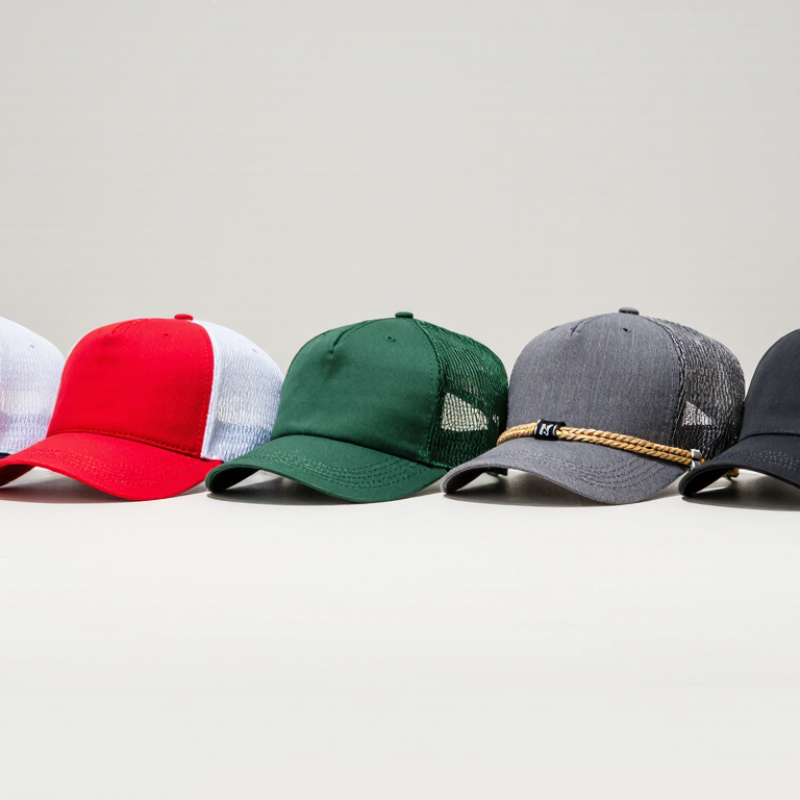
2026 Top Types of Snapback Trucker Hats for Global Buyers
Snapback trucker hats combine a five-panel or six-panel crown with a breathable mesh back. Their front panel holds the main artwork, while the rear closure controls fit across different head sizes. A curved or flat brim changes the visual balance. It also affects sun coverage and packing space. Grand View Research reported that the global headwear market reached about USD 26.5 billion in 2023, with continued growth expected through 2030. This demand raises the need for reliable construction, not just attractive graphics. From production experience, uneven stitching around the brim remains a common weakness.
The core structure should use firm front buckram, clean seam taping, and reinforced eyelets. Cotton blends feel natural, but polyester often offers better shape retention and drying performance. Textile Exchange reported that polyester represented roughly 57% of global fiber production in 2023. Recycled polyester accounted for about 12% of polyester output. These figures support wider material choices, though recycled content can still vary in hand feel and color consistency. That point deserves more testing.
Tips: Check the crown height with a real fitting sample. Measure the snapback’s adjustment range, not only its listed size. Inspect mesh tension after repeated bending. A strong sample should keep its front panel smooth, with no twisting at the brim. Ask suppliers for fabric composition, stitch density, colorfastness, and pre-shipment inspection records. Do not rely on photographs alone.
Leading Snapback Trucker Hat Types for 2026
The leading snapback trucker hat types for 2026 combine breathable construction, adjustable fit, and stronger visual identity. Classic mesh-back hats remain practical for warm regions and outdoor promotions. Their open panels improve airflow, while structured fronts preserve a clean shape. Foam-front trucker hats offer bold decoration space and a lighter feel. They suit event campaigns, travel collections, and casual retail lines.
Performance trucker hats are gaining attention among buyers who value quick-drying fabrics and sweat-resistant bands. Recycled-material versions also appeal to customers seeking clearer sourcing information. Rope-detail styles add a vintage touch without changing the basic snapback function. In my sampling experience, stitching quality often matters more than decoration. A weak seam can damage customer trust quickly. The most attractive sample may not be the best seller.
Tips: Compare mesh density, crown height, visor curve, and snap durability before placing a large order. Ask for physical samples in several colors. Check whether the front panel wrinkles after pressing. Confirm size measurements for regional customers, since one fit rarely suits every market. Keep decoration methods consistent across fabric types. Small differences become obvious in bulk production. Also review material descriptions and care labels carefully. Some “eco” claims need better documentation. That point is easy to overlook.
Leading snapback trucker hat types classified by typical panel construction
Panel count is a standard physical specification used to distinguish cap constructions. Five-panel formats are common for foam-front, performance, and recycled-material trucker hats, while six-panel formats provide a more traditional structured crown. All listed styles can be produced with a mesh back and adjustable snap closure.
Snapback trucker hats now serve different climates, price points, and buyer expectations. Grand View Research valued the global headwear market at approximately USD 22.1 billion in 2023. That scale rewards careful material selection, not decoration alone. Cotton twill gives a soft hand and structured front panel. Polyester offers lighter weight, faster drying, and stronger color retention. Textile Exchange reported that polyester represented about 57% of global fiber production in 2023. Recycled polyester can reduce virgin input, but buyers should request traceable documentation.
Mesh construction changes comfort more than many catalogs suggest. Nylon mesh feels smoother and resists moisture during humid travel. Polyester mesh usually offers lower cost and stable mass production. A 5-panel design creates a cleaner decoration area, while a 6-panel crown can provide more familiar shaping. Small perforations improve airflow, yet overly open mesh may expose the wearer to dust and strong sunlight. This trade-off needs field testing. Studio samples often mislead.
Customization works best when the decoration matches the panel material. Flat embroidery suits dense cotton fronts, while heat-transfer graphics can preserve fine lines on smoother polyester. Woven patches add texture, but extra backing may increase stiffness. Buyers should confirm embroidery density, thread colorfastness, seam strength, and sweatband composition before approving bulk production. The International Trade Centre identifies apparel and textile sourcing as highly specification-driven, making measurable quality requirements essential. A slightly imperfect prototype is useful. It reveals problems early, although many purchasing teams still approve samples too quickly.
Global buyers should compare snapback trucker hats by construction, not appearance alone. Common types include foam-front, cotton-front, performance-mesh, rope-front, and recycled-polyester styles. Each serves a different function. Foam fronts create bold graphics, while cotton fronts feel more structured and natural. Performance mesh dries faster in hot climates. Recycled polyester can support sustainability goals, but suppliers should request material certificates and test reports.
Fit needs measurable checks. Ask for crown height, brim length, closure adjustment, and head-size range. A hat that fits a 58-centimeter sample may fail on larger retail markets. Measure five pieces from different cartons, not one perfect sample. This catches inconsistent panels, uneven stitching, and loose snap buttons. Small details matter. The sweatband should remain smooth after repeated wear, and mesh should resist snagging during packing.
The NRF and Appriss Retail 2024 Consumer Returns report estimated US retail returns at 16.9% of annual sales in 2024. Hat fit is only one factor, but poor sizing can increase avoidable returns. Buyers should request wash testing, colorfastness testing, seam-strength checks, and carton compression reviews. Textile Exchange’s Materials Market Report 2024 also shows recycled polyester remains the leading recycled synthetic fiber, making traceability important. A practical warning: “eco-friendly” claims without documentation are weak evidence. I still find buyers focusing too heavily on logo clarity. Durability often matters more.
Comparative reference table based on commonly used construction methods, materials, sizing practices, and performance requirements in the global headwear market.
| Hat Type | Typical Front Construction | Typical Back Construction | Ventilation | Fit and Shape | Typical Material Options | Best Functional Use | Quality Checks for Buyers | Common Order Considerations |
|---|---|---|---|---|---|---|---|---|
| Classic 5-Panel Trucker | One-piece or multi-piece structured front with a relatively clean surface | Plastic snap closure with polyester or nylon mesh panels | High; mesh normally covers most of the rear half | Medium crown; usually suited to a standard adult head shape | Cotton twill, polyester twill, recycled polyester, nylon mesh | General retail, outdoor promotion, casual daily wear | Check panel symmetry, front stiffness, clean stitching, snap strength, and mesh recovery | Confirm adult size range, decoration area, carton packing, and color consistency |
| Classic 6-Panel Trucker | Six-panel crown with a center seam and a more traditional baseball-cap profile | Adjustable snapback with mesh side and rear panels | High; airflow is provided through multiple mesh sections | More contoured than a 5-panel style; often available in mid or high crown | Cotton-polyester blend, brushed polyester, twill, polyester mesh | Sports events, workwear programs, promotional campaigns | Inspect crown alignment, seam taping, brim attachment, sweatband comfort, and snap adjustment | Compare crown height, head circumference coverage, embroidery limits, and colorfastness |
| Foam Front Trucker | Foam-backed front panel with a smooth surface and structured profile | Breathable mesh with a plastic snap closure | High at the rear; lower across the foam front | High crown and noticeable front projection; generally a retro fit | Polyester foam laminate, nylon or polyester mesh, plastic closure | Event merchandise, outdoor promotions, large printed graphics | Check foam thickness consistency, lamination quality, print adhesion, odor, and edge curling | Specify print method, artwork size, foam density, storage conditions, and heat exposure limits |
| Performance Trucker | Lightweight structured or semi-structured front with moisture-management fabric | Fine-hole performance mesh and adjustable snap closure | Very high; designed for airflow during active use | Low to medium crown; often designed to reduce bulk during movement | Moisture-wicking polyester, recycled polyester, lightweight nylon mesh | Running, hiking, golf, travel, and warm-weather activities | Verify breathability, sweatband absorption, UV claims, wash durability, and secure closure performance | Request test documentation for any stated UV, recycled-content, or moisture-management claims |
| Washed Cotton Trucker | Soft, unstructured or lightly structured cotton front with a worn-in appearance | Polyester mesh and adjustable snapback closure | High through the mesh; cotton front provides limited airflow | Relaxed, flexible fit with a lower-profile appearance | Washed cotton, cotton twill, cotton-polyester blend, polyester mesh | Lifestyle retail, casual uniforms, tourism and leisure merchandise | Check shade variation, shrinkage, seam puckering, odor, and wash-test results | Approve a color standard, define acceptable wash variation, and confirm care-label language |
| Recycled-Fabric Trucker | Structured or semi-structured front made with recycled-content fabric | Recycled polyester mesh and plastic snap closure, where specified | High; comparable to conventional mesh trucker construction | Available in low, mid, or high crown depending on the pattern | Recycled polyester, recycled nylon, cotton blends, recycled mesh | Sustainability-focused retail, corporate programs, outdoor merchandise | Request recycled-content evidence, check fabric traceability, seam quality, and shade consistency | Define acceptable certification documents, recycled percentage, labeling, and packaging requirements |
| Water-Resistant Trucker | Coated or tightly woven front panel designed to resist light moisture | Mesh rear with snapback adjustment; mesh itself may not be water-resistant | High at the rear; reduced where coatings or laminations are used | Usually medium crown with a stable brim for outdoor use | Coated polyester, nylon, polyester mesh, water-repellent finishes | Light outdoor work, travel, festivals, and changeable weather | Distinguish water-resistant from waterproof claims; test seam leakage, coating adhesion, and breathability | Specify performance test method, spray rating target, care limits, and finish durability after washing |
| High-Crown Streetwear Trucker | Tall structured front with a broad decoration area and pronounced profile | Large mesh panels with a wide-range snapback closure | High across the rear, subject to mesh density and panel coverage | High crown; better suited to buyers seeking a bold silhouette | Structured polyester, cotton twill, foam laminate, polyester mesh | Fashion retail, music merchandise, streetwear collections | Evaluate crown balance, brim angle, embroidery density, panel distortion, and wearing comfort | Use physical samples to approve the silhouette; confirm decoration placement on the taller front |
Regional demand is shaping snapback trucker hat sourcing in 2026. North American buyers often prefer breathable mesh, firm fronts, and adjustable closures. European retailers increasingly request recycled fabrics, muted colors, and traceable materials. Hot-climate markets may favor lighter crowns and wider ventilation panels. In parts of the Middle East, strong UV exposure makes fabric performance more important. Latin American buyers often balance bright colors, flexible sizing, and strict cost targets. These patterns are useful, but never absolute.
Sourcing should begin with a measurable product sheet. Specify crown height, brim curve, mesh weight, closure material, sweatband composition, and logo application. Ask for colorfastness, seam strength, dimensional stability, and odor-control test records. A pre-production sample should match the approved measurement chart. Small differences matter. A curved brim can change the entire fit.
Import planning needs equal attention. Confirm the correct tariff classification with a qualified customs broker, because hat materials can affect classification. Check country-of-origin marking, textile fiber declarations, packaging rules, and destination-market labeling requirements. Some buyers overlook carton dimensions and create avoidable freight costs. Another common mistake is approving a sample without checking bulk color variation. The sample may look excellent. The shipment may not. Keep signed specifications, inspection photos, test reports, and packing details together. Requirements change, and supplier documents can be incomplete. Rechecking them is slower, but safer.