How to Choose the Right Industrial Packaging Equipment?
Choosing the right industrial packaging equipment is crucial for businesses. This decision impacts efficiency, safety, and product integrity. Understanding the specific needs of your operations is key.
Consider the types of products you handle. Are they fragile, heavy, or require special handling? The equipment must reflect these qualities. Evaluate the packaging speed and volume. High-demand products may need faster machinery compared to low-volume items. Invest in equipment that balances speed and quality.
Review the technology available. Advanced features can improve functionality but may require training. Be aware of the maintenance needs and costs over time. An ideal choice should offer reliable performance and be cost-effective. This process can feel overwhelming, leading to errors. A mistake might result in production delays or damaged goods. Reflect on past choices to avoid repeating errors. Choose wisely to ensure long-term success with your industrial packaging equipment.
Understanding the Importance of Industrial Packaging Equipment
Understanding the importance of industrial packaging equipment is crucial for businesses aiming to optimize their operations. Proper packaging not only protects products but also enhances efficiency. According to a recent industry report, up to 30% of logistics costs are related to packaging. Investing in the right equipment can significantly reduce these expenses.
Furthermore, effective packaging directly impacts sustainability. A study indicated that 50% of consumers prefer brands that prioritize eco-friendly packaging. This trend is driving businesses to adopt innovative solutions. For example, utilizing recyclable materials can attract environmentally conscious customers and potentially increase sales.
However, many companies still grapple with choosing the right equipment. Often, there is a lack of awareness about the latest advancements. Some might overlook the importance of automation in speeding up operations. This can lead to suboptimal workflow and increased labor costs. Businesses must actively assess their needs and stay informed about technological developments.
Industrial Packaging Equipment Efficiency Comparison
This bar chart illustrates the efficiency of different industrial packaging methods. Automated packaging systems show the highest efficiency, while manual packing methods have the lowest. Understanding these differences is crucial for selecting the right industrial packaging equipment.
Identifying Your Packaging Needs and Requirements
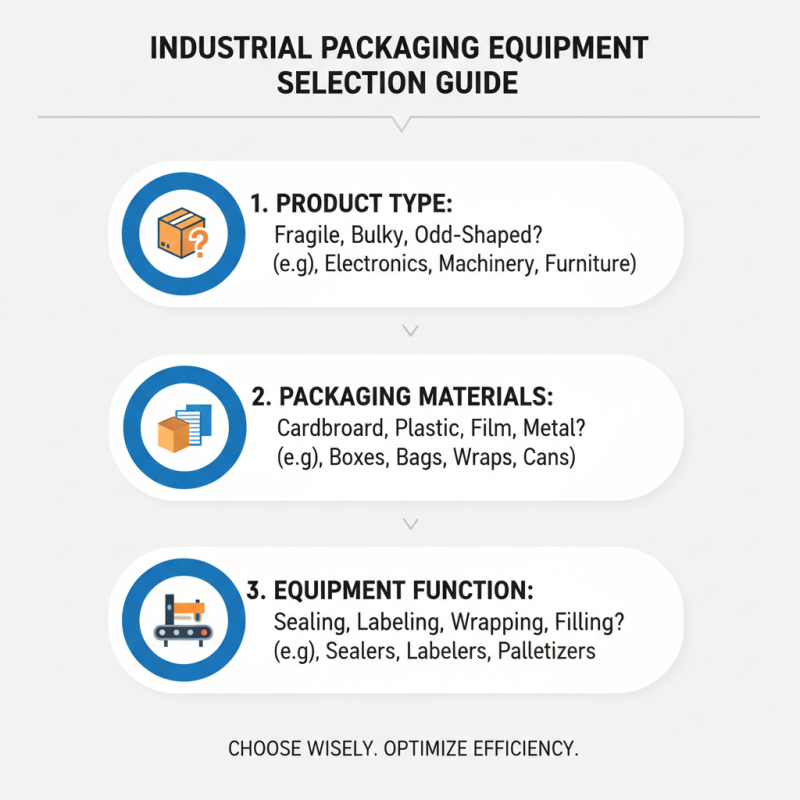
When selecting the right industrial packaging equipment, it's crucial to identify your specific packaging needs. Start by examining the types of products you need to package. Are they fragile, bulky, or oddly shaped? This will influence the type of equipment required. Consider the materials too. Different packaging materials might require specialized machinery for sealing or labeling.
Think about the scale of your operations. Small batches may not justify heavy investment in machinery. Conversely, high-volume production requires equipment that can keep up with demand. Assess your workflow and space as well. Equipment that fits poorly can create logistical nightmares. It’s also wise to involve your team in this process. Their insights can uncover needs you may overlook.
Budget is another critical factor. Investing in equipment is important, but it should not compromise your financial stability. Sometimes, it’s better to opt for leasing options to prevent large upfront costs. Additionally, don’t ignore maintenance costs. Some machines require regular servicing, which can add up quickly. Overall, make sure to weigh all aspects carefully. There’s often a fine balance in choosing what seems perfect versus what is practically possible.
Evaluating Different Types of Packaging Equipment
When evaluating different types of packaging equipment, it is essential to consider the specific needs of your production line. Various equipment types include shrink wrappers, case sealers, and filling machines. Each has its unique benefits and drawbacks. For example, shrink wrappers can provide a tight seal, but they may not be suitable for all product shapes. Case sealers are efficient but can struggle with lightweight items.
Understanding your product and workflow is crucial. Consider factors such as speed, flexibility, and space constraints. Some equipment can be too rigid. It may not adapt to your varying product sizes. Additionally, think about maintenance and ease of operation. Equipment that requires extensive upkeep can slow down production. Make sure to engage with operators to gather their insights. They often have valuable feedback on equipment usability.
Cost is a significant factor, but don’t overlook the total ownership cost. Cheaper machines may save you money upfront but could lead to higher operational costs. It’s vital to analyze how the equipment fits into your overall production strategy. A piece of equipment that seems perfect could become a burden. Take time to reflect on what you truly need and how it aligns with your goals.
Factors to Consider When Choosing Equipment Suppliers
When selecting equipment suppliers, several factors demand careful consideration. Quality and reliability are paramount. According to industry reports, 70% of enterprises experienced delays due to equipment failures. This figure stresses the importance of investing in durable machinery. A proven track record can help predict future performance. It’s crucial to assess supplier reviews and testimonials.
Pricing also plays a significant role. Equipment budgets often exceed initial estimates by 15% on average. Being aware of hidden costs can prevent budget overruns. Evaluating cost against quality is vital. It’s a balancing act that requires attention. Moreover, review supplier warranties and service agreements. A solid warranty can save significant costs in the long run.
Supplier communication and support systems should not be overlooked. Industry data shows that 40% of operators reported dissatisfaction with after-sales support. Engaging suppliers who prioritize client communication can enhance efficiency. It’s essential to gauge responsiveness during the selection process. A supplier's willingness to address concerns often reflects their commitment to service.
How to Choose the Right Industrial Packaging Equipment? - Factors to Consider When Choosing Equipment Suppliers
| Factor |
Description |
Importance Level |
| Equipment Type |
Identifying the type of packaging equipment that best suits your product needs. |
High |
| Supplier Experience |
Evaluating the years of experience the supplier has in the industry. |
Medium |
| Customization Options |
Assessing whether the supplier provides custom solutions for unique packaging needs. |
High |
| Technical Support |
Considering the level of technical support offered post-purchase. |
High |
| Pricing |
Analyzing the cost-effectiveness of the equipment relative to your budget. |
Medium |
| Sustainability |
Determining if the supplier adheres to sustainability practices in manufacturing. |
Medium |
| Delivery Time |
Reviewing the lead time from order to delivery to meet project timelines. |
High |
| Reviews and References |
Looking at customer reviews and obtaining references to gauge satisfaction. |
Medium |
Assessing the Total Cost of Ownership for Packaging Solutions
When evaluating industrial packaging equipment, understanding the total cost of ownership (TCO) is crucial.
TCO goes beyond the initial purchase price. It includes maintenance, operation, and training costs.
For instance, a more expensive machine may have a longer lifespan, reducing costs over time.
On the other hand, a cheaper option might lead to frequent breakdowns.
It's also important to consider energy consumption.
Some equipment consumes significantly more power than others, which can inflate utility bills.
Calculate potential savings from energy-efficient models. Additionally, factor in labor costs.
If a machine requires extensive training, this increases the overall TCO.
Sometimes, companies overlook hidden expenses. These can accumulate and affect profitability.
You might find yourself torn between options. It can be tempting to go for the lowest upfront cost.
Yet, remember that short-term savings can lead to long-term headaches.
Consider long-term benefits too. Evaluate performance metrics.
Efficiency, reliability, and output quality matter. Each decision should align with your strategic goals.
Aim for a balance between cost and performance.