How to Choose the Right Industrial Packaging Machines for Your Business?
In today’s competitive market, selecting the right industrial packaging machines can greatly impact a business's efficiency and profitability. According to a recent report by Research and Markets, the global industrial packaging market was valued at $60 billion in 2021, with a projected CAGR of 4.3% from 2022 to 2030. This growth highlights the importance of investing in suitable machines that align with production needs.
Businesses may overlook the specific requirements for packaging, leading to inefficiencies. The choice of machinery directly affects product integrity and operational costs. For example, a mismatch in machine speed or technology can result in unnecessary delays and increased waste. Each packaging solution has its strengths, but understanding them requires a deep dive into technical specifications and industry trends.
Taking the time to evaluate options can prevent costly mistakes. Relying solely on price may compromise quality. A thorough analysis, including reviewing industry case studies and expert insights, can lead to more informed decisions. Making the right choice in industrial packaging machines is a critical step that deserves careful consideration.

Understanding Your Packaging Needs for Industrial Applications
When selecting industrial packaging machines, understanding your specific needs is key. Different businesses have unique packaging requirements based on their products and production processes. It's crucial to assess the type of materials you will be working with. For instance, fragile items often need cushioned packaging solutions. Heavier products might require sturdier machinery. Knowing the weight and dimensions of your products can help narrow down your options.
Efficiency is another important factor. Measure your production speed and output requirements. The right machinery should align with your desired throughput. Additionally, consider the technological aspects. Automation can reduce labor costs, but it may also require training for staff. Don't overlook the maintenance needs. A machine that is difficult to service may lead to unexpected downtime.
Lastly, reflect on your budget. High-quality machines can be expensive, but they may save costs in the long run. Meanwhile, cheaper options might not offer the durability you need. Balancing cost and quality is essential. Think about your long-term goals. Expanding businesses may require scalable solutions. Investing time in understanding your packaging needs will pay off in efficiency and cost-effectiveness.
Industrial Packaging Machines Usage by Type
Types of Industrial Packaging Machines and Their Functions
When selecting industrial packaging machines, understanding the types and functions is crucial. Packaging machinery can greatly influence efficiency. According to recent industry reports, automated systems have increased packaging speed by up to 30%. This highlights the importance of selecting the right machine for your production line.
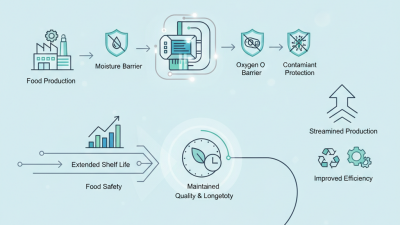
There are several common types of industrial packaging machines. For instance, filling machines are designed to dispense products into containers, while sealing machines protect them from contamination. A survey by the Packaging Machinery Manufacturers Institute noted that 75% of businesses benefit from enhanced product shelf life using proper sealing techniques. Additionally, labeling machines ensure compliance with regulatory standards, improving tracing and branding.
However, the choice is not always straightforward. Many companies struggle with the initial integration of new machinery. They often underestimate the training required for staff to operate complex systems. Continuous feedback is essential during this process. Evaluate the efficiency of the new packaging setup regularly. This reflection can reveal areas for improvement and adaptation, leading to better performance over time.
How to Choose the Right Industrial Packaging Machines for Your Business?
| Type of Machine |
Function |
Suitable Products |
Key Features |
| Automatic Filling Machine |
Fills containers with specified volume |
Liquids, powders, granules |
High speed, accuracy, programmable settings |
| Labeling Machine |
Applies labels to products |
Bottles, boxes, bags |
Adjustable speed, multi-label applications |
| Carton Sealer |
Seals cartons for shipping |
Cartons of various sizes |
Automatic flaps folding, sticky tape application |
| Shrink Wrapper |
Wraps products in heat-shrink film |
Bundles of items, pallets, individual products |
Efficient packaging, space-saving |
| Strapping Machine |
Secures packages with straps |
Boxes, pallets, heavy loads |
Adjustable tension, various strap materials |
Evaluating Machine Specifications and Features
When selecting industrial packaging machines, understanding the specifications and features is vital. Focus on the machine's capacity. Determine how much product you plan to package daily. Look for machines that can handle your desired output efficiently. Evaluate speed settings. A machine that operates quickly can enhance productivity. However, balance is key. Too much speed may compromise quality.
Next, consider the types of materials the machine can handle. Different products require different packaging solutions. Ensure the machine suits your needs, whether you use plastic, cardboard, or biodegradable materials. Explore advanced features like automation. Automated systems can reduce labor costs and minimize human error. However, assess the maintenance requirements. Complex machines can lead to unexpected downtime if not maintained properly.
Don’t overlook the machine's adaptability. Packaging demands can change over time. Can your chosen machine adjust to different sizes and styles? This flexibility can save costs in the long run. Every machine represents a significant investment. Take your time, conduct thorough research, and consult professionals when needed. Evaluating specifications and features can help you make a more informed decision for your business.
Considering Budget and ROI for Packaging Equipment
When considering industrial packaging machines, budget and ROI are crucial factors. A clear understanding of your financial limits helps narrow down options. Focus on machines that optimize efficiency without breaking the bank. Analyze the initial investment versus long-term savings. Sometimes, spending more upfront leads to better durability and lower maintenance costs.
It's important to assess the return on investment carefully. Calculate potential gains from increased production speed and reduced labor costs. The right equipment can significantly enhance your productivity. However, not all high-priced machines guarantee better performance. Some may underperform, leading to unexpected expenses.
Engage with industry professionals or case studies to glean insights. Real-world experiences offer valuable perspectives. Consider attending trade shows for firsthand demonstrations. Engage in discussions to balance technical specifications with practical insights. Investing time in research can prevent costly mistakes down the road. Choosing wisely requires a blend of careful budgeting and informed decision-making.
Tips for Choosing the Right Supplier and Support Services
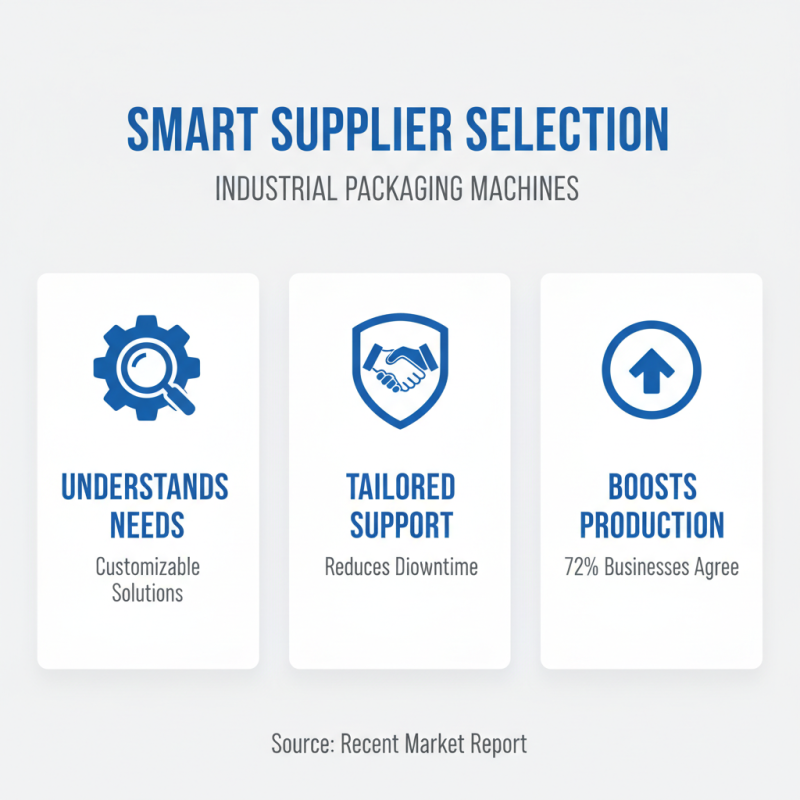
Choosing the right supplier for industrial packaging machines is critical. A good supplier understands your specific needs. They should offer customizable solutions to enhance efficiency. According to a recent market report, 72% of businesses focus on suppliers who provide tailored support. This helps in reducing downtime and increasing production rates.
When evaluating suppliers, consider their experience and expertise. Industry leaders often have years of knowledge. They can guide you in selecting the right machinery based on your production goals. A reliable supplier offers timely maintenance and support services. According to industry standards, this can reduce unexpected machine failures by up to 30%. Look for those who can demonstrate their success with previous clients.
Pricing is always a factor. Many companies face challenges when trying to balance budget and quality. Gathering multiple quotes can provide a clearer picture of the market. However, the cheapest option may not always be the best choice. It’s essential to assess the total cost of ownership. This includes maintenance, training, and support over time. In the end, understanding these factors is crucial for making an informed decision.