Choosing the right material handling equipment can reshape an entire warehouse. It affects travel time, worker safety, storage density, and order accuracy.
Dr. James M. Apple, a respected material handling systems authority, described the field this way: “Material handling is the art and science of moving, storing, protecting, and controlling material.” That definition remains practical today. It includes familiar tools, such as forklifts, pallet jacks, conveyors, and overhead cranes. It also covers automated storage and retrieval systems, automated guided vehicles, autonomous mobile robots, and robotic picking equipment.
Each type solves a different operational problem. A conveyor may move cartons steadily between packing stations. A forklift may handle heavy pallets across uneven warehouse distances. An automated system can improve consistency, but it demands reliable software, sensors, maintenance, and trained staff. The best choice depends on load weight, product shape, aisle width, floor conditions, throughput, and available budget.
There is no universal winner.
Even experienced teams can misjudge future demand. A system that performs well during peak season may become unnecessary later. Therefore, this guide compares the top types of material handling equipment through practical use cases, strengths, limitations, and safety considerations. It also questions assumptions that are often treated as facts. More automation is not always better. Sometimes, a simple pallet truck remains the most sensible tool.
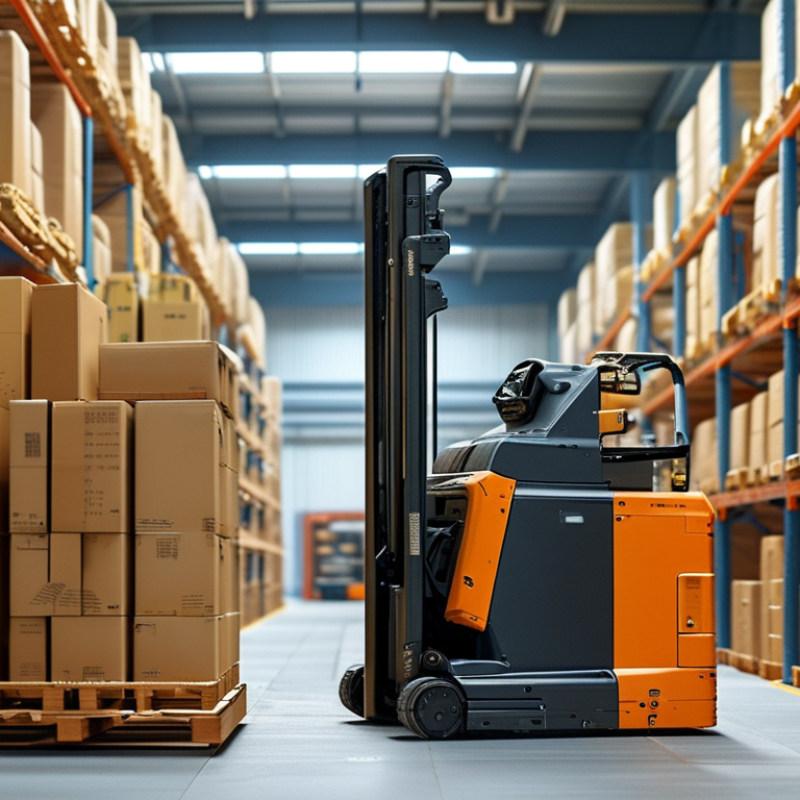
Material handling equipment refers to the tools and systems used to move, store, protect, and control materials. It supports the flow of goods from receiving docks to storage areas, workstations, and shipping zones. Its core function is not simply transportation. It also reduces lifting risks, improves accuracy, and limits product damage.
Common types include conveyors, pallet trucks, forklifts, hoists, racks, carts, and automated storage systems. Conveyors move cartons along fixed routes, while pallet trucks handle short-distance loads. Forklifts lift heavy pallets onto rack levels. Hoists raise materials vertically, often near production equipment.
Racking systems use floor height efficiently, but poor placement can make retrieval slow and unsafe.
Choosing equipment requires more than checking load capacity. Operators should examine aisle width, floor strength, package shape, travel distance, and handling frequency. A small cart may outperform a powered vehicle in a narrow picking area. Sensors and control systems can improve tracking, yet they still need accurate data and regular inspection. A system may look efficient on paper.
In warehouse assessments, blocked travel paths often reveal weak planning rather than equipment failure. Uneven floors, unclear labels, and overloaded shelves create hidden delays. Staff feedback matters because operators notice awkward turns and repeated strain first. Even experienced teams can miss these details during a quick review.
Material handling equipment falls into several practical categories. Storage equipment includes shelving, racks, bins, and vertical carousels. These systems keep cartons visible and reduce floor congestion. Conveyors move items between receiving, production, and shipping areas. They work well when product routes remain consistent.
Lifting equipment handles height and weight. Forklifts, pallet jacks, hoists, and scissor lifts support different loads and working conditions. Transport equipment, such as carts and tugger systems, moves materials across short distances. Automated guided vehicles can follow programmed routes, but they still require clear paths and careful supervision. Control matters.
Tips: Match equipment to load size, travel distance, floor conditions, and lifting frequency. Check rated capacity before every task. Leave enough space for turning and emergency access. A small measurement mistake can create a serious bottleneck.
In daily operations, the best category is rarely the most advanced one. A simple cart may outperform automation in a changing workspace. I have seen teams choose large equipment too early, then lose valuable aisle space. That decision needed more review. Consider worker posture, maintenance access, noise, and training time. Combine storage, lifting, and transport equipment around the actual workflow, not an ideal diagram. Record near misses and recurring delays. Those details often reveal whether the equipment truly improves safety and productivity.
| Equipment Category | Common Equipment Types | Primary Function | Typical Load or Capacity Range | Best-Fit Applications | Key Selection Considerations |
|---|---|---|---|---|---|
| Transport Equipment | Conveyors, industrial trucks, carts, and tugger trains | Moves materials horizontally or vertically between work areas, storage locations, and production lines. | Light parcels Pallets Bulk containers | Warehouses, distribution centers, manufacturing plants, airports, and order-fulfillment operations. | Travel distance, route layout, load dimensions, traffic flow, floor conditions, and required movement frequency. |
| Positioning Equipment | Lift tables, work-positioners, manipulators, hoists, and ergonomic lifting devices | Adjusts the height, orientation, or position of a load so that materials can be handled more safely and accurately. | Small components Machinery parts Production loads | Assembly stations, maintenance areas, packaging lines, machine loading, and ergonomic work cells. | Required lift height, operator reach, load center of gravity, cycle time, precision, and workplace ergonomics. |
| Unit Load Formation Equipment | Palletizers, depalletizers, stretch wrappers, strapping machines, and carton-forming systems | Combines individual items into stable, standardized unit loads for storage and transportation. | Cartons Cases Pallet loads | Food and beverage, consumer goods, pharmaceuticals, retail distribution, and high-volume packaging operations. | Product shape, packaging material, load stability, throughput, pallet pattern, and compatibility with downstream equipment. |
| Storage Equipment | Selective pallet racks, drive-in racks, cantilever racks, shelving, bins, and mezzanines | Stores materials in organized locations while maximizing available floor and vertical space. | Totes Pallets Long loads | Warehouses, spare-parts rooms, cold storage, archives, workshops, and retail backrooms. | Ceiling height, aisle width, inventory rotation, load weight, seismic requirements, access frequency, and fire-safety rules. |
| Identification and Tracking Equipment | Barcode scanners, radio-frequency identification systems, sensors, scales, and warehouse terminals | Captures, records, and communicates information about the location, quantity, identity, and status of materials. | Individual items Cases Pallets | Inventory control, receiving, picking, shipping verification, traceability, and automated storage systems. | Data accuracy, scanning range, environmental conditions, system integration, labeling standards, and cybersecurity. |
| Automated Material Handling Equipment | Automated storage and retrieval systems, autonomous mobile robots, automated guided vehicles, and robotic arms | Performs or supports material movement, storage, picking, and handling with limited direct operator control. | Totes Cartons Pallets | High-throughput distribution, e-commerce fulfillment, repetitive production tasks, and facilities with labor or space constraints. | Throughput, navigation method, integration with software, facility layout, safety systems, maintenance, and return on investment. |
| Bulk Material Handling Equipment | Hoppers, bins, silos, feeders, bucket elevators, pneumatic conveyors, and screw conveyors | Stores, meters, conveys, or discharges loose materials such as powders, grains, pellets, and aggregates. | Powders Granules Aggregates | Mining, agriculture, chemical processing, cement production, food processing, and plastics manufacturing. | Material flow characteristics, moisture, abrasiveness, density, dust control, sanitation, temperature, and required feed rate. |
| Industrial Trucks | Hand pallet trucks, powered pallet trucks, stackers, counterbalance lift trucks, and reach trucks | Lifts, transports, stacks, and retrieves unit loads, especially palletized materials. | Manual loads Palletized goods Heavy loads | Loading docks, storage aisles, manufacturing facilities, construction sites, and general warehouse operations. | Load capacity, lift height, turning radius, aisle width, power source, operator training, visibility, and surface quality. |
| Engineering and Support Systems | Dock equipment, safety barriers, charging stations, guards, platforms, and material-handling accessories | Supports the safe, efficient, and reliable operation of primary material handling equipment. | Facility-dependent Load-specific | Loading bays, warehouse traffic areas, battery charging zones, maintenance locations, and production support areas. | Compatibility, workplace safety, accessibility, maintenance requirements, regulatory compliance, and total operating cost. |
Choosing material handling equipment starts with the task, not the catalog. Storage equipment includes pallet racks, shelving, and automated storage systems. Pallet racks suit dense, standardized loads, while shelving handles cartons and smaller parts. A 2024 report from the Materials Handling Institute found that 83% of supply chain professionals planned to increase technology investment. That trend matters, but automation is not automatically the best answer.
Transport equipment moves goods across floors or between workstations. Manual pallet jacks are affordable for short distances and light-duty movement. Forklifts handle heavier pallets, but require wider aisles, trained operators, and disciplined traffic control. Conveyors provide steady flow between fixed points. Automated guided vehicles can reduce repetitive travel, although poor route design may create delays instead of efficiency. Measure travel distance first.
Lifting equipment addresses vertical movement and suspended loads. Hoists and overhead cranes support controlled lifting in production areas. Forklifts offer greater flexibility but need stable surfaces and careful load balancing. OSHA reports approximately 85 forklift-related fatalities and 34,900 serious injuries annually in the United States. That figure should influence equipment selection and training. In my experience, operators notice practical problems first: blind corners, damaged pallets, or controls placed too far away. A warehouse plan can look perfect on paper. It may still fail during a busy shift. References: Materials Handling Institute, 2024 Industry Report; U.S. Occupational Safety and Health Administration, Powered Industrial Trucks Safety Information.
Typical rated load capacity by equipment type
Material handling equipment is selected according to the task: pallet trucks and forklifts support transport, stackers and reach trucks serve storage operations, while mobile cranes handle heavier lifting work. The figures show representative rated capacities commonly found in industrial equipment specifications; actual capacity depends on the model, load center, lift height, attachments, and operating conditions.
Material handling equipment includes forklifts, pallet jacks, conveyors, cranes, automated storage systems, and mobile robots. The right choice depends on the work, not the equipment’s popularity. Measure load weight, pallet dimensions, travel distance, aisle width, floor condition, and lifting frequency before comparing models. A narrow aisle may favor a compact truck, while continuous carton flow may justify conveyors. Material flow matters more than appearance.
Safety deserves equal attention. The U.S. Occupational Safety and Health Administration estimates that forklifts cause about 85 fatalities and 34,900 serious injuries annually in the United States. Therefore, visibility, operator training, braking performance, guarding, and maintenance access require documented review. MHI’s 2024 Annual Industry Report found that 83% of supply chain professionals planned to increase technology and innovation investment. Automation is growing. Still, it should solve a measured bottleneck, not decorate an ambitious proposal.
Calculate total cost of ownership. Include energy use, spare parts, software, inspections, labor, downtime, and floor modifications. A cheaper purchase can become expensive within months. In site assessments, teams sometimes overestimate future volume and buy excessive capacity. That mistake deserves scrutiny. Test equipment during peak shifts, with real loads and actual operators. Ask whether workers can safely recover from a jam or battery failure. The answer may expose weaknesses that a polished demonstration hides.
Understanding Safety, Maintenance, and Operational Requirements
Material handling equipment includes forklifts, pallet jacks, conveyors, cranes, and automated carts. Each type solves a different movement problem.
A forklift needs trained operators, stable loads, clear aisles, and daily checks. Inspect forks, tires, mast chains, brakes, lights, and warning alarms before use. Keep loads within the rated capacity. Keep loads centered. A small imbalance can become a serious tip-over.
Pallet jacks, conveyors, and cranes
Pallet jacks appear simple, but damaged wheels increase pushing force and strain. Conveyors require guards, accessible emergency stops, and careful control of pinch points. Never clear a jam while moving parts remain energized. Stop and isolate it. Cranes demand verified load charts, secure rigging, and a controlled lifting zone.
Floor strength, ceiling height, turning space, and traffic patterns should guide equipment selection.
A machine can be technically suitable yet operationally awkward.
Maintenance should combine scheduled servicing with operator reporting. Record defects, repair dates, battery condition, and recurring failures. Dust, oil, cold rooms, and uneven floors may change inspection frequency. Charging areas need ventilation, separation from ignition sources, and clear access. Training must cover speed, visibility, pedestrian contact, and emergency response. Checklists help, but they are not perfect. A rushed signature can hide a real defect. Supervisors should review near misses and adjust procedures, even when no one was injured.