
What Is 3 1 8 x 230 Thermal Paper Used For?
The phrase “3 1 8 x 230 thermal paper” usually describes a receipt roll measuring 3 1/8 inches wide and approximately 230 feet long. It is widely used in point-of-sale printers, grocery checkout counters, restaurants, pharmacies, fuel stations, ATMs, and self-service kiosks. The roll produces images through heat, not ink. That makes printing quick and reduces cartridge maintenance.
Industry research supports this practical role. Smithers’ “The Future of Thermal Paper to 2028” identifies point-of-sale receipts, labels, tickets, and transaction records as major thermal paper applications. The Federal Reserve’s 2024 Diary of Consumer Payment Choice also reported that cash represented about 16% of consumer payments in 2023. Digital payments are growing, but physical receipts still support refunds, expense claims, warranties, and daily store operations. A receipt is small. Its information is not.
However, the size description is not fully sufficient. Printer compatibility also depends on core diameter, roll diameter, winding direction, paper sensitivity, and maximum roll capacity. A 3 1/8-inch roll may fit one terminal but jam another. This is an easy detail to overlook. Buyers should check the printer manual before ordering.
Material safety and storage deserve attention, too. The European Union restricted BPA in thermal paper under REACH, effective from January 2020. Reputable suppliers should provide chemical-composition information and consistent quality documentation. Store rolls away from heat, sunlight, moisture, oils, and plasticizers. Otherwise, receipts may fade, darken, or become unreadable. That failure can be surprisingly costly.
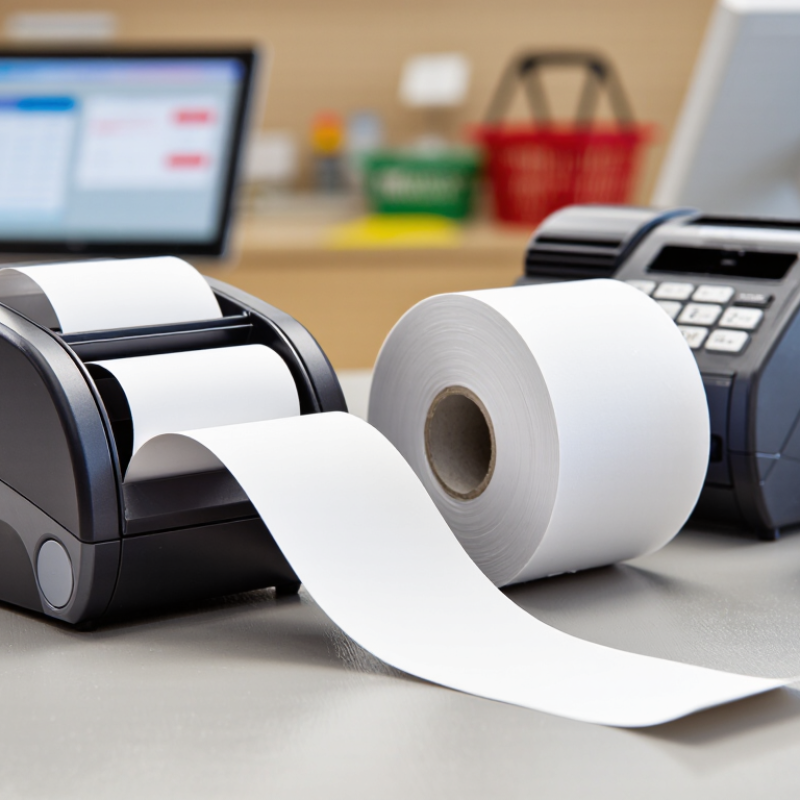
Understanding the Dimensions of 3 1/8 x 230 Thermal Paper
What Is 3 1 8 x 230 Thermal Paper Used For?
Understanding the Dimensions of 3 1/8 x 230 Thermal Paper
The size usually means 3 1/8 inches wide and 230 feet long. That equals approximately 79.4 millimeters by 70.1 meters. This format fits many compact receipt printers used at checkout counters, cafés, parking facilities, and service desks. The 3 1/8-inch width gives receipts enough space for item descriptions, prices, taxes, and payment details. The 230-foot length reduces replacement frequency during busy shifts. That distinction matters. Some suppliers may write 230 meters or 230 millimeters, so buyers should verify the unit before ordering.
Thermal paper creates images through heat, without ink cartridges or ribbons. According to Grand View Research, the global thermal paper market was valued at about USD 4.1 billion in 2023, with continued growth expected through 2030. Smithers’ industry outlook also identifies point-of-sale receipts and transaction records as major thermal paper applications. In practical use, roll performance depends on more than length. Core diameter, outer roll diameter, paper thickness, and printer capacity all affect compatibility. A longer roll can fail if its diameter exceeds the printer compartment. Small detail, big consequence. Field checks should also consider print darkness, smooth feeding, and fading after storage. A 230-foot estimate is not perfectly reliable because paper thickness varies. That is an overlooked limitation.
What Is 3 1/8 x 230 Thermal Paper Used For? - Understanding the Dimensions of 3 1/8 x 230 Thermal Paper
| Data Dimension | Specification or Value | What It Means | Typical Use or Practical Consideration |
|---|---|---|---|
| Paper Width | 3 1/8 inches (approximately 79.4 mm) | The width of the paper roll and printed receipt. | Commonly used in compact point-of-sale, payment, kiosk, parking, and ticket-printing equipment designed for approximately 80 mm paper. |
| Roll Length | 230 feet (approximately 70.1 meters) | The approximate continuous length of paper wound onto one roll. | Provides a practical balance between print capacity and roll size for locations that issue receipts or tickets regularly. |
| Printing Method | Direct thermal | Images are produced by heat from a compatible thermal printhead rather than liquid ink or toner. | Suitable for receipts, transaction records, queue tickets, parking notices, and short-term labels. |
| Ink or Toner Requirement | Not required | The heat-sensitive coating on the paper reacts directly to the printhead. | Helps simplify routine operation because there are no ink cartridges or toner cartridges to replace. |
| Common Document Types | Receipts, order slips, tickets, and transaction summaries | The paper format is intended for narrow, immediate-use printed records. | Often used at checkout counters, restaurants, self-service terminals, service desks, and transportation facilities. |
| Receipt Information Capacity | Depends on font size, graphics, and line spacing | A longer receipt uses more paper, while compact text and fewer graphics use less. | Businesses can reduce paper consumption by limiting unnecessary blank lines, large logos, and oversized text. |
| Printer Compatibility | Requires a printer that accepts approximately 80 mm-wide rolls and the specified roll diameter | Width alone does not guarantee compatibility; the printer compartment must also accommodate the roll size. | Check the equipment manual for supported width, maximum outer diameter, core size, and paper type before purchasing. |
| Core Size | Varies by roll design and printer requirements | The cardboard or plastic center supports the roll on the printer holder. | Confirm the required core diameter because a correctly sized paper width may still fail to fit the printer. |
| Storage Conditions | Cool, dry, and protected from direct light | Heat, humidity, friction, plasticizers, and prolonged light exposure can affect the thermal coating. | Store rolls in their original packaging and away from heaters, windows, solvents, and strong magnetic or chemical sources. |
| Long-Term Archival Use | Generally not the first choice for permanent records | Thermal images can fade or darken over time depending on paper formulation and environmental exposure. | For records that must be retained for long periods, follow applicable regulations and consider making a digital or non-thermal copy. |
| Handling Guidance | Handle with clean, dry hands | Excessive heat, abrasion, oils, and chemicals may mark or damage the printed surface. | Keep printed receipts flat when possible and avoid prolonged contact with hot surfaces or solvent-based materials. |
| Main Advantage | Fast, quiet, cartridge-free printing | Direct thermal technology has few moving consumable-related components. | Useful for high-volume short-form printing where speed and operational convenience are important. |