What Is a Plastic Vacuum Bottle?
A Plastic Vacuum Bottle is a reusable container designed to slow heat transfer, often using two walls with a sealed, evacuated space between them. That gap reduces heat movement through air. The plastic body can make the bottle lighter and easier to carry than many metal designs. But “plastic” describes the material, not the insulation method. Some double-wall bottles use foam or trapped air instead of a vacuum. Check the product specifications.
A useful reminder comes from physicist and engineer William Thomson, Lord Kelvin: “When you can measure what you are speaking about, and express it in numbers, you know something about it.” The quotation is often attributed to Kelvin. For a bottle, measurable details include heat-retention time, capacity, lid design, and whether the manufacturer confirms vacuum insulation. Look closely at the lid, too. A loose seal can let warmth escape, even when the walls perform well.
In everyday use, that difference shows up on a cold morning: the outside may stay dry while coffee remains warm inside. Still, performance varies. Not every bottle keeps drinks hot for the same length of time, and test conditions matter. It is tempting to treat “vacuum” as a guarantee. It is not. A careful comparison considers materials, construction, cleaning instructions, and realistic test results. Small details count. A narrow opening may help limit spills, but can make brushing the interior harder. That trade-off deserves a second look before choosing a bottle.
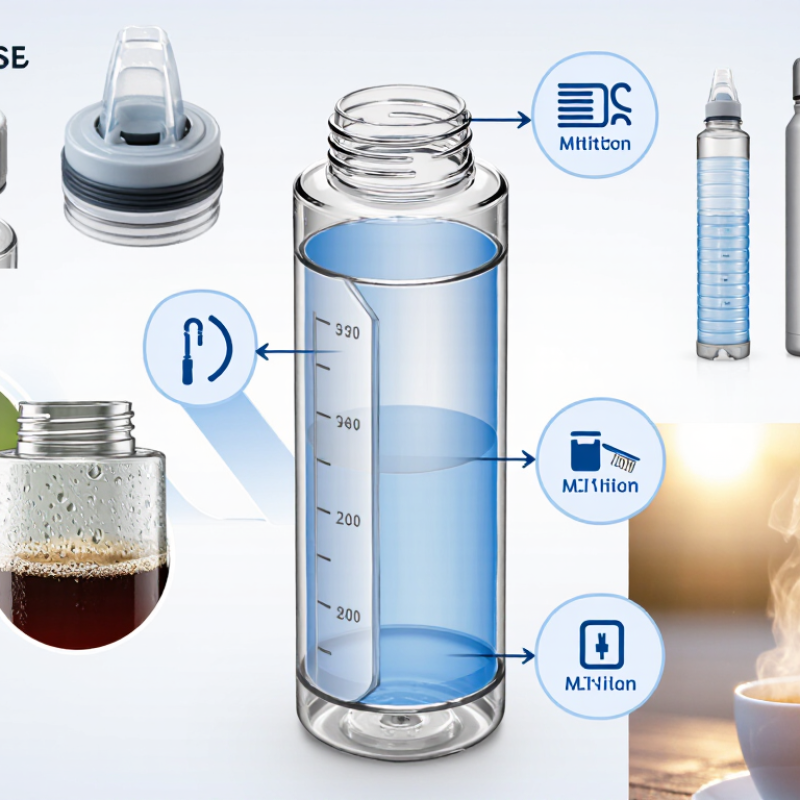
Definition and Basic Structure of a Plastic Vacuum Bottle
What Is a Plastic Vacuum Bottle?
Definition and Basic Structure of a Plastic Vacuum Bottle
A plastic vacuum bottle is an insulated container with a plastic outer body and a space designed to limit heat transfer. Its inner vessel may be plastic, glass, or metal, depending on the construction. In many designs, the inner vessel and outer shell create a narrow evacuated gap. Vacuum helps. With fewer gas molecules in the gap, less heat travels by conduction and convection. The bottle still gains or loses heat through its neck, lid, supports, and surface radiation.
The structure is easier to picture as nested parts: an outer shell, an inner vessel, a sealed gap, and a lid with a gasket. The neck and base need support, so they can form thermal bridges. ASHRAE’s Handbook—Fundamentals reports air’s thermal conductivity at about 0.026 W/m·K near 300 K; reducing gas in the gap limits one path of heat transfer, but does not remove every path. Construction varies, and “plastic” may describe only the outside. That distinction is easy to miss.
Material scale also matters. PlasticsEurope’s Plastics—The Fast Facts 2024 reports global plastics production of 413.8 million tonnes in 2023. That figure is not specific to bottles, but it shows how widely used these materials are. In a real bottle, a loose lid or damaged seal can matter more than the shell’s appearance. Small details matter.
How Vacuum Insulation Works
A plastic vacuum bottle usually has two walls with a narrow, sealed space between them. Air is removed from this gap, limiting heat transfer by conduction and convection. That gap matters. With fewer gas molecules moving between the walls, hot drinks cool more slowly and cold drinks warm less quickly. The effect is not perfect: the neck, lid, and areas where the walls join can still conduct heat.
The ASHRAE Handbook—Fundamentals lists air’s thermal conductivity near 0.026 W/(m·K) at 20°C. For comparison, the IEA Energy Conservation in Buildings and Community Systems Programme’s Annex 39 reports vacuum insulation panel values that can approach 0.004 W/(m·K), depending on materials and conditions. These figures describe different systems, not a direct bottle test, but they show why removing air can help. A reflective layer may also reduce heat transfer by radiation. Not magic.
In a real bottle, the lid often becomes the weak point. Touch the cap after filling the bottle with hot water, and it may feel warmer than the outer wall. That is a small clue to heat escaping through the closure. Plastic can make the bottle lighter, but the insulation depends on the sealed gap, wall design, and lid—not plastic alone. I’d treat performance claims cautiously unless test conditions are stated, since fill temperature and room conditions change results.
Materials and Manufacturing Process
A plastic vacuum bottle combines plastic parts with a sealed insulating space, but its exact construction can vary. The outer shell and cap are often molded from durable plastics such as polypropylene. In many designs, the inner vessel is stainless steel rather than plastic. This is because a rigid metal liner handles the pressure difference created when air is removed from the space between walls. The word “plastic” can describe the bottle’s exterior, not every layer. That distinction matters.
Manufacturing starts with molding the shell, cap, and other fittings. A separate inner liner is formed, then joined to the outer structure while leaving a narrow gap. Air is extracted through a small opening, which is sealed to create the vacuum layer. Some products use foam or another insulating material instead, so not every double-wall bottle is truly vacuum insulated. Small details count. Seals must fit evenly, and the finished bottle is checked for leaks and insulation performance. A slight weakness at the neck can reduce heat retention, even when the body looks well made. I would not judge quality by appearance alone; construction details are harder to see.
Types and Common Uses
What Is a Plastic Vacuum Bottle?
Types and Common Uses
A plastic vacuum bottle usually has an inner and outer wall with air removed from the space between them. That vacuum slows heat transfer, helping drinks stay warm or cool. Some bottles have plastic outer shells and metal inner liners; others use plastic for more of the body. Check the product details, since “insulated” can also mean foam or an air gap, not a vacuum. The difference matters.
Common types include compact bottles for school bags, larger bottles for sports, and wide-mouth versions for soups or ice cubes. Some use a push-button stopper; others have a screw cap or a built-in drinking spout. Not all are equal. A narrow opening may help reduce spills, while a wide one is easier to wash but can lose heat faster when opened.
These bottles suit commutes, day hikes, lunch breaks, and children’s drinks. They are often lighter than all-metal designs, though the plastic surface can scratch or retain odors over time. A coffee smell can linger. I have found that lid parts are easy to overlook when cleaning, especially around small seals. Check that every removable piece dries fully, and follow the maker’s temperature guidance before filling it with very hot liquid. Don’t assume every plastic bottle is microwave-safe.
| What Is a Plastic Vacuum Bottle? - Types and Common Uses |
| Type | Typical Construction | Is It Vacuum-Insulated? | Common Uses | Practical Considerations |
| Plastic-bodied glass vacuum flask | A plastic exterior surrounds a glass inner flask. The insulating vacuum is between the glass liner and its protective outer structure. | Yes. The vacuum is generally around the glass liner, not inside the plastic shell itself. | Keeping tea, coffee, or other drinks hot or cold at home, work, or during travel. | Glass can preserve flavor, but it is breakable. Handle carefully and check the product’s care instructions. |
| Plastic-bodied stainless-steel vacuum bottle | A plastic outer casing or components surround a double-wall stainless-steel vessel with a sealed vacuum gap. | Yes. The vacuum gap between the steel walls reduces heat transfer. | Reusable drink bottles for commuting, school, outdoor activities, and everyday use. | Usually more impact-resistant than a glass-lined design. The lid and seals can still wear or leak over time. |
| Double-wall plastic bottle with an air gap | Two plastic walls enclose a layer of air; some designs may use foam or another insulating material. | Usually no. An air gap is not the same as a sealed vacuum chamber. | Cold drinks, short outings, lunch bags, and situations where a lightweight bottle is useful. | Typically provides less temperature retention than a true vacuum-insulated bottle. Check product specifications before relying on it for long-term insulation. |
| Specialty vacuum-insulated plastic design | Uses engineered plastic components as part of a vacuum-insulation structure; construction varies by product. | Potentially. Confirm that the manufacturer specifically identifies a sealed vacuum layer. | Niche applications where low weight or a particular plastic construction is desired. | Less common than metal vacuum-insulated bottles. Performance, durability, and temperature limits depend on the specific design. |
| Key distinction: “Plastic bottle” may describe only the outer body or lid. A bottle is vacuum-insulated only when its construction includes a sealed vacuum space; double walls alone do not prove that it has one. |
Benefits, Limitations, and Care
What Is a Plastic Vacuum Bottle?
Benefits, Limitations, and Care
A plastic vacuum bottle uses a sealed space between walls to slow heat transfer. Its plastic body can feel light in a backpack and tolerate everyday knocks. Light, but not invincible. Scratches, cracks, or a worn lid seal can reduce performance and trap odors. Not every plastic model is designed for hot drinks, so check the maker’s temperature guidance before filling it.
Care is simple, but details matter. Wash the bottle and lid separately with warm, soapy water; use a soft brush around the threads and gasket. Let every part dry fully with the lid off. Avoid abrasive pads and strong cleaners, which can damage surfaces or seals. NAPCOR’s 2023 PET Recycling Report estimated a 29.1% U.S. PET bottle recycling rate for 2022. That figure covers PET bottles broadly, not reusable vacuum bottles, which may combine several materials. PlasticsEurope’s 2023 report estimated 400.3 million tonnes of plastics were produced worldwide in 2022, with 90.6% from fossil sources. Those figures are a useful reminder: a reusable bottle’s value depends partly on keeping it in service. Still, one bottle cannot fix a complicated waste system.
What Is a Plastic Vacuum Bottle? Benefits, Limitations, and Care
A vacuum bottle uses an evacuated gap between its walls to reduce heat transfer. The chart compares approximate thermal conductivity at room temperature: lower values mean less heat passes through a material by conduction. Actual bottle performance depends on its design, seals, and materials.
Care: Follow the bottle’s care instructions, avoid microwaving it, and check regularly for cracks or damaged seals. Use only dishwasher cleaning if the bottle is labeled dishwasher-safe.