How to Choose the Right Filling Machine for Your Business?
Choosing the right filling machine is a production decision, not merely a purchasing task. It affects accuracy, hygiene, labor, waste, and future capacity. A machine that performs well with thin juice may struggle with thick sauces or creams. Small details matter, including nozzle size, container stability, and cleaning access.
Market data shows why this decision deserves careful attention. Grand View Research estimates the global packaging machinery market at approximately USD 52.83 billion in 2023, with continued growth expected through 2030. Its analysis highlights automation, flexible production, and improved operational efficiency as important market drivers. PMMI’s industry reports also identify labor shortages, equipment integration, and data visibility as continuing concerns for packaging operations. These trends make a reliable filling machine increasingly valuable, especially for businesses planning higher output without sacrificing consistency.
Begin with the product itself. Measure viscosity, temperature, foam behavior, and particulate size. Then define the container format, target speed, fill volume, and acceptable accuracy range. A piston filler may suit dense products, while an overflow or gravity system may better handle certain liquids. Cleaning requirements deserve equal attention. CIP capability, food-contact materials, guarded moving parts, and documented maintenance procedures support safer operations and stronger audit readiness.
Do not choose by speed alone. A machine rated for 120 containers per minute may deliver less in real production. Changeovers, stoppages, operator training, and material waste can reduce practical output. I have seen specifications look impressive on paper, yet fail during product trials. That is the uncomfortable lesson. Ask suppliers for test runs, sample data, warranty terms, and local service support. The best filling machine is the one that matches today’s process and leaves sensible room for tomorrow’s growth.
Define Your Product and Filling Requirements
Choosing a filling machine starts with understanding your product, not browsing equipment catalogs. A thin liquid behaves differently from a thick cream. Powders and products with particles create different challenges. Record viscosity, temperature, density, foam, and particle size during normal production. These details can change throughout the day.
Define your required fill volume and acceptable accuracy. A small bottle may need precise dosing, while a large container may prioritize speed. Check the container shape, opening size, material, and stability on the conveyor. I have seen promising trials fail because a flexible bottle tilted under the filling nozzle.
Packaging tests should happen before final equipment selection.
Cleaning and product-contact materials also deserve careful attention. Confirm that seals, valves, and hoses tolerate your formula and cleaning method. Ask for test results using your actual product and containers. Measure accuracy across several production runs, not one convenient sample. A machine that performs well for ten cycles may struggle after hours of operation. That weakness matters. Include changeover time, operator access, calibration needs, and future product variations in your requirements. No checklist is perfect. Recheck uncertain assumptions with production staff, maintenance technicians, and quality personnel before approving a specification.
Match Machine Types to Your Filling Application
How to Choose the Right Filling Machine for Your Business?
Match Machine Types to Your Filling Application
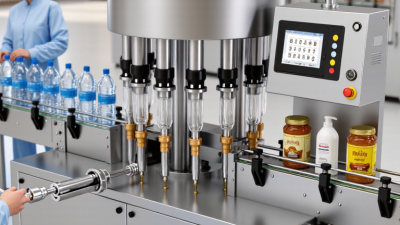
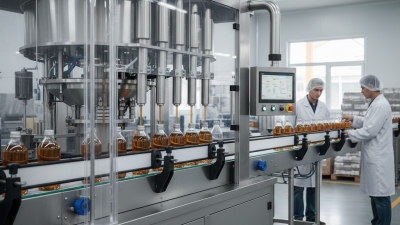
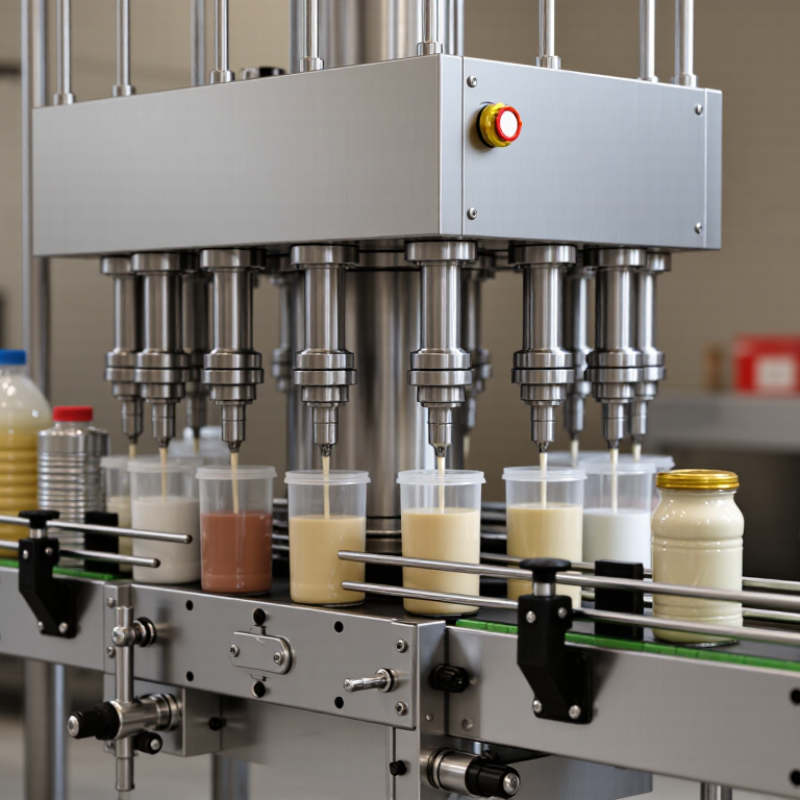
The product should guide the machine choice, not the other way around. Thin liquids often suit gravity or overflow fillers, especially when bottles need consistent levels. Thick products, such as creams or sauces, usually require piston or servo-driven filling systems. Their controlled movement helps manage viscosity changes during production.
Foamy liquids need gentle handling. A timed-flow or bottom-up system can reduce bubbles and messy container walls. Products with small particles require wider product paths and suitable valve designs. Powdered materials need auger fillers with controlled screw rotation. Container shape matters too. Tall, narrow bottles may need different nozzles than wide jars.
I once saw a production team choose a fast machine before testing its product. The line looked impressive, but the filler struggled with temperature-related viscosity changes. That choice caused frequent adjustments and material waste. A small product trial would have exposed the problem earlier. Test the actual product, container, fill volume, and target speed together. Measure accuracy over repeated cycles, not only one successful run. Check cleaning access, changeover time, and operator training needs. These details affect daily reliability more than advertised speed. A machine that runs well in a demonstration may behave differently on a busy floor. Ask for documented test results and define acceptable filling tolerance before purchase.
How to Choose the Right Filling Machine for Your Business?
Match the filling machine to product viscosity and handling requirements. Overflow fillers suit low-viscosity liquids, while piston fillers are generally better for thick products. Peristaltic fillers are useful where product isolation and gentle handling are priorities.
Representative dynamic viscosity values at approximately 20°C. Actual viscosity varies with temperature, formulation, shear rate, and additives.
Evaluate Speed, Accuracy, and Production Capacity
How to Choose the Right Filling Machine for Your Business?
Evaluate Speed, Accuracy, and Production Capacity
Choosing a filling machine begins with your actual production routine, not an impressive brochure number. A machine rated for 60 containers per minute may slow down with thick liquids, narrow bottles, or frequent adjustments. Measure your current output during a normal shift. Record changeover time, operator breaks, and rejected containers. These details reveal your practical speed.
Accuracy protects both product costs and customer trust. Check the machine’s filling tolerance with your real liquid, not only with water. Test several container sizes and inspect the fill level after repeated cycles. Small errors become expensive across thousands of units. Weight checks, calibration records, and easy access to adjustment controls improve reliability. I once saw a fast line lose its advantage because operators needed too long to correct inconsistent fills.
Production capacity should include tomorrow’s demand, but avoid buying far beyond your realistic needs. Extra capacity can increase purchase, maintenance, and training costs. Ask whether the machine can run continuously at your target speed without excessive wear. Review cleaning time, maintenance access, and spare-part availability. A simple trial with your containers and product is more valuable than a confident sales estimate. Leave room for growth, but question every unused feature.
Check Compatibility, Automation, and Cleaning Needs
Choosing a filling machine starts with compatibility, not speed.
A machine must match the product’s viscosity, temperature, foam level, and particle size. Container shape matters too. Narrow bottles may need guided nozzles, while flexible pouches require different handling. Product-contact materials should resist corrosion and avoid unwanted reactions. Testing with your actual product and containers is essential. Catalog specifications rarely reveal every production problem.
Automation should fit your operation.
A small facility may benefit from simple controls and quick manual adjustments. Larger lines may need sensors, recipe storage, automatic container indexing, and fault alerts. More automation is not always better. Complex systems can increase training time and repair costs. During commissioning, record fill accuracy, changeover time, and operator errors. I once underestimated cleaning downtime during a production trial. That was my mistake. The daily schedule suffered more than expected.
Cleaning requirements deserve equal attention.
Look for smooth surfaces, accessible product paths, and minimal dead spaces. If the formula allows it, clean-in-place features can reduce labor and improve repeatability. However, manual cleaning may still be necessary for sticky or sensitive products. Ask how long disassembly takes, which tools are required, and how cleaning results are verified. A practical supplier should provide procedures, material information, and test support. Request a documented trial before purchase, even if the machine appears suitable.
Compare Costs, Maintenance, and Future Scalability
How to Choose the Right Filling Machine for Your Business?
Purchase price rarely shows the real cost of a filling machine. Compare installation, changeover time, energy use, spare parts, and operator training. A lower-cost machine may need more manual adjustment. That difference becomes expensive during a busy production week. PMMI industry research identifies labor availability and flexible automation as major packaging investment drivers. Therefore, ask how quickly the machine handles different container sizes. Also check whether one operator can manage cleaning and changeovers safely.
Maintenance deserves careful attention. The U.S. Department of Energy reports that compressed-air leaks can waste 20–30% of compressor output. Pneumatic systems may quietly increase utility bills. Request air consumption data at normal production speed. Inspect pumps, seals, valves, and sensors during a factory demonstration. Review the recommended replacement schedule. It is easy to underestimate downtime. A realistic cost model should include lost production, not only repair invoices.
Tips: Calculate total cost over five years. Compare warranty response times and local technician availability. Ask for maintenance records from similar operations. Plan future scalability with modular filling heads, extra lanes, and software capacity. Industry OEE benchmarks often place world-class performance near 85%, but actual plants may operate much lower. That gap deserves investigation. Sometimes, buying a smaller machine first is sensible. Sometimes, it only postpones a costly upgrade.