Top Industrial Packaging Equipment Types in 2026

Industrial packaging equipment is becoming more than a collection of machines at the end of a production line. Filling systems, form-fill-seal machines, cartoners, case packers, labelers, inspection units, and palletizers each affect throughput, product protection, and changeover time. Grand View Research valued the global packaging machinery market at about $48.9 billion in 2023 and projected continued growth through 2030. These are market estimates, not a guarantee of demand for every equipment category. Still, they show why manufacturers are assessing upgrades carefully.

In 2026, equipment choices will depend on the product, package format, and pace of production. A beverage plant may prioritize accurate filling and capping, while a food facility may need flexible bagging and dependable seal inspection. At the end of the line, robotic palletizers can handle repetitive stacking, but they still need suitable layouts and trained operators. PMMI’s industry reports track packaging machinery trends and manufacturer concerns, including workforce needs and investment priorities. That context matters. The best line is not always the fastest one; reliable changeovers, accessible maintenance points, and clear inspection data can matter just as much. This guide compares major industrial packaging equipment types and explains where each fits, what to evaluate, and which trade-offs deserve a closer look. Forecasts can shift, and real operating conditions are often less tidy than a product brochure suggests.
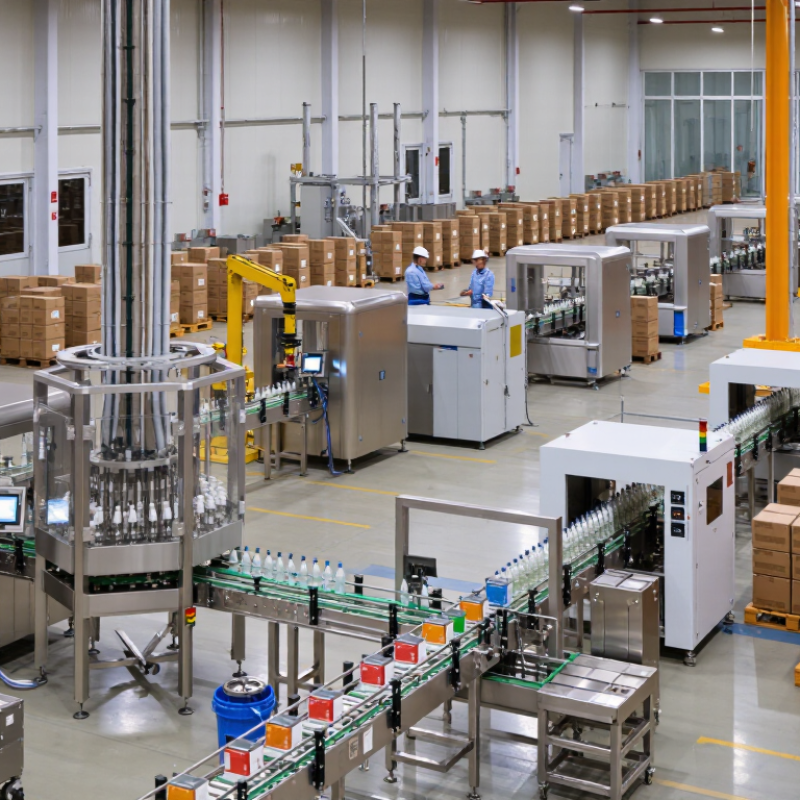
Top Industrial Packaging Equipment Types in 2026

Industrial Filling Machines for Accurate Product Dosing

Top Industrial Packaging Equipment Types in 2026

Industrial Filling Machines for Accurate Product Dosing

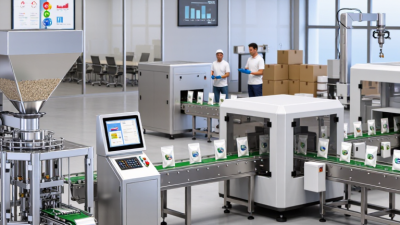
Industrial filling machines deliver repeatable portions into bottles, jars, pouches, and other containers. The right system depends on the product, not just the package. A piston filler can handle thicker creams, while a flow-meter system may suit free-flowing liquids. For products that foam, a diving nozzle can fill from the bottom upward and reduce splashing.

Accuracy starts with a stable product and a well-set machine. Changes in temperature can alter viscosity, affecting how quickly a product moves through a line. Operators should check fill weights or volumes during production, especially after a changeover. Small details matter. A nozzle that drips between cycles can leave residue on containers and gradually affect dosing consistency.

Setup takes judgment. A line may run smoothly during a short test yet behave differently after hours of production. That is why teams should record settings, inspect sample fills, and recalibrate when conditions change. A checkweigher can help flag underfilled or overfilled packages, but it does not replace routine machine checks. No setup is perfect, and that is worth remembering.

Packaging Sealing Machines for Secure, Contamination-Resistant Closures

Packaging sealing machines turn a filled pouch, tray, or carton into a controlled barrier. Heat sealers rely on consistent temperature, pressure, and dwell time. Even a small change can leave a weak seam. Ultrasonic systems can help when heat-sensitive materials or narrow sealing areas make conventional jaws less suitable. The right choice depends on the package film, product, line speed, and cleaning routine. A seal is not a sterilization step. It cannot compensate for poor hygiene upstream.

PMMI’s 2024 State of the Industry report estimated U.S. packaging machinery shipments at $10.9 billion in 2023, up 5.8% from 2022. That broader investment signals the importance of dependable equipment, though it does not guarantee better seals. Operators should watch for wrinkles, product residue, and uneven pressure at the seal edge. Inline vision checks can spot visible defects; periodic leak tests can reveal failures that cameras miss. No seal is perfect. Maintenance matters, too: worn jaws and drifting sensors can quietly undermine a good setup. A practical sealing program pairs machine settings with documented checks and real package testing.

Labeling and Coding Systems for Product Identification and Traceability

Labeling and coding systems turn each package into a readable record. They apply product names, batch codes, dates, and machine-readable symbols during production. On a busy line, a label must stay straight, while a code must remain clear enough to scan. Small details matter.

The right method depends on the package surface, line speed, and production environment. Thermal transfer printing can produce sharp text on flexible film and labels. Inkjet systems mark cartons and bottles without contact, while laser systems create permanent marks on suitable materials. Each method has trade-offs. Dust, condensation, glare, or a rough surface can weaken readability, so test the actual package before settling on equipment.

Traceability depends on more than printing a code. Cameras or scanners can check whether codes are present and readable, then signal staff when a mark fails inspection. Linking verified codes with production records helps teams investigate quality issues and locate affected batches. Yet inspection settings need regular review; a scanner may accept a faint mark that becomes difficult to read later. Even careful setup cannot prevent every smudge. Operators should watch print quality, clean sensors, and adjust settings when materials or speeds change. A quick sample check at shift changes can catch problems before many packages pass the line.

Top Industrial Packaging Equipment Types in 2026 — Labeling and Coding Systems for Product Identification and Traceability

Equipment type Identification method Common package or product Typical application Traceability data supported Key selection considerations
Pressure-sensitive label applicator Applies pre-printed or in-line printed adhesive labels Cartons, bottles, jars, tubs and cases Product names, barcodes, ingredients, handling information and lot details Linear barcodes, GS1-128, QR codes and human-readable batch or date fields Label dimensions, container shape, line speed, label placement accuracy and adhesive compatibility
Print-and-apply labeling system Prints variable information on a label and applies it to the package Shipping cases, corrugated cartons, pallets and large containers Order-specific labels, logistics labels and case identification Serial numbers, lot codes, shipment data and GS1 logistics identifiers Print resolution, label size, tamp or wipe-on applicator type, data-system connectivity and label verification
Wraparound labeling machine Wraps a pressure-sensitive label around a container Cylindrical bottles, cans and jars Full-wrap product labeling and package identification Product codes, barcodes, lot details and date information when included on the label Container diameter, label overlap, container spacing, orientation and changeover requirements
Top-and-bottom labeling system Applies labels to one or two flat package surfaces Trays, cartons, clamshells and flat-sided packages Retail information, ingredients, price or identification labels Barcodes, QR codes, batch details and variable product information Package stability, surface condition, product spacing and synchronization between applicators
Continuous inkjet coder Non-contact ink printing on a moving production line Bottles, cans, flexible packaging and other production items High-throughput printing of dates, lot codes and short product identifiers Alphanumeric batch codes, dates and, where print quality permits, machine-readable codes Substrate and ink compatibility, print contrast, maintenance needs, environment and line speed
Thermal inkjet coder Non-contact inkjet printing using thermal printhead technology Cartons, paperboard, labels and selected porous or coated materials High-resolution text, barcodes and variable graphics on packaging Lot and date codes, barcodes, QR codes and variable product data Print distance, substrate porosity, ink selection, resolution and code readability
Thermal transfer overprinter Transfers ink from a ribbon onto flexible packaging film Form-fill-seal packs, pouches and flexible packaging webs Printing variable codes and product information during packaging Dates, batch numbers, text and suitable barcode or two-dimensional code layouts Film type, ribbon grade, printhead width, web speed and print durability
Laser marking system Creates a mark by changing or removing material from a surface Glass, selected plastics, coated materials, metal and cartons, depending on laser type Permanent or low-consumable coding for product and package identification Lot codes, dates, alphanumeric identifiers and machine-readable codes when contrast is sufficient Substrate response, required mark contrast, laser type, extraction and applicable safety controls
Inline code inspection and verification system Uses cameras or barcode readers to inspect printed or applied codes Labeled, coded or serialized products and cases Checks code presence, position and readability; can trigger rejection of nonconforming items Read results, reject events and code-to-product records when connected to line software Code type, camera position, lighting, inspection criteria, reject mechanism and data retention

Capabilities depend on equipment configuration, substrate, line conditions and code requirements. Confirm target throughput, code quality and integration needs with the equipment supplier and packaging-line team.

Case Packers and Cartoners for Grouping Products into Retail Packages

Case packers and cartoners turn individual products into shelf-ready groups. A cartoner forms a retail carton, loads products, and closes the pack. A case packer then places cartons into shipping cases. The distinction matters: carton size, product orientation, and case pattern all affect changeover time and pack quality. Small details count.

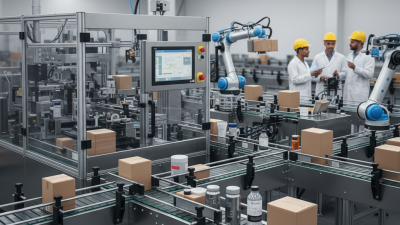
The International Federation of Robotics reported 541,302 industrial robots installed worldwide in 2023, a 10% year-on-year increase. That figure covers all industries, not packaging alone, but it signals broader investment in automation. In packaging lines, robotic loading can handle mixed product shapes, while cartoners help maintain consistent folds and closures. Operators still need clear access for replenishing cartons and correcting misfeeds.

For 2026 equipment planning, match the machine to real production conditions: daily format changes, available floor space, and the firmness of the product itself. A carton that looks neat may still crush delicate contents. Vision inspection can detect missing items or poor closures, but it cannot fix unstable upstream product flow. That part is easy to underestimate. Test representative products and packaging materials at production speed before selecting a system; a successful trial on one format does not guarantee smooth changeovers on the next.

Palletizing Systems for Efficient Warehouse-Ready Loads

Top Industrial Packaging Equipment Types in 2026

Palletizing Systems for Efficient Warehouse-Ready Loads

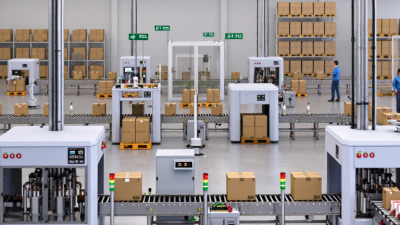
Palletizing systems turn packed cases into stable loads ready for storage and shipping. Common options include conventional layer palletizers, robotic systems, and collaborative robots for lower-volume lines. The right choice depends on case weight, carton dimensions, hourly output, and available floor space. A robotic cell can handle changing patterns, while a layer palletizer may suit steady, high-volume production.

The International Federation of Robotics’ World Robotics 2024 report recorded 541,302 industrial robot installations worldwide in 2023, a 10% increase from 2022. That figure covers industrial robots broadly, not palletizers alone. Still, it signals expanding automation across manufacturing.

For warehouse-ready loads, the practical details matter: a crushed corner, uneven layer, or poorly placed slip sheet can cause trouble at the stretch wrapper or receiving dock.

Ask suppliers to test real cartons and pallet patterns before choosing a system. Check how quickly operators can change formats, clear a jam, and restart safely.

Not always simple.

A neat pattern on screen may shift when carton surfaces are dusty or cases arrive slightly bowed. Also consider downstream conveyors and forklift access; a fast palletizer cannot fix a layout that creates bottlenecks. Pilot runs reveal these gaps. Keep the test conditions documented, including case dimensions and line speed, so performance claims remain verifiable.