
Why Choose Automatic Packaging Machines for Your Business?
Why Choose Automatic Packaging Machines for Your Business?
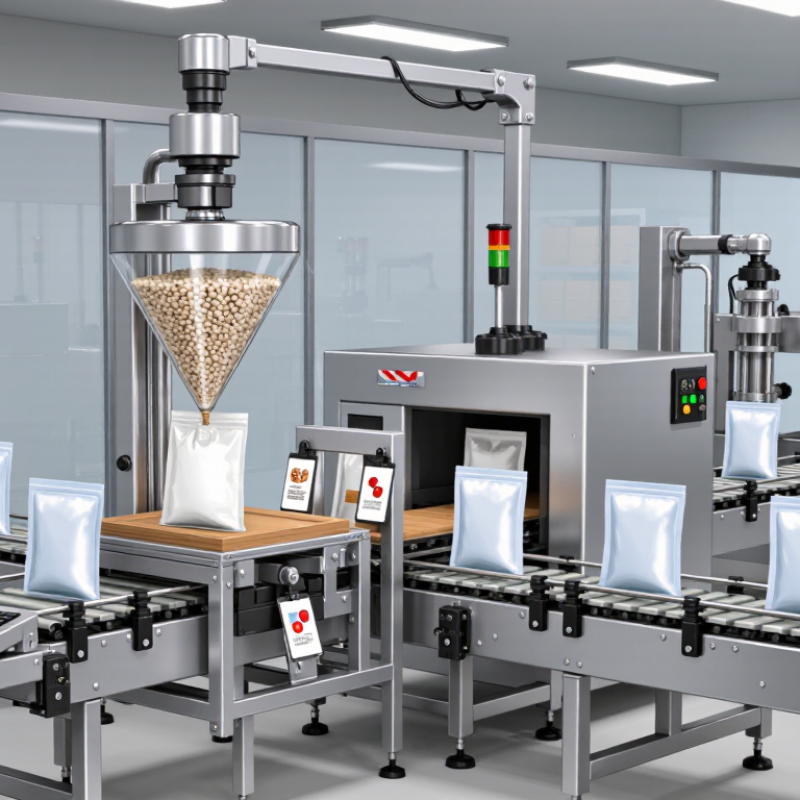
Choosing automatic packaging machines is a practical decision, not merely a search for faster production. A well-designed system can fill, seal, label, and inspect products with consistent timing. Picture a production line handling hundreds of pouches each hour. Sensors check positioning while servo motors control every movement. Fewer manual adjustments can reduce product damage, packaging waste, and avoidable downtime.
Jorge Izquierdo, Vice President of Market Development at PMMI, has emphasized, “Automation should make workers more productive, not simply remove them from the process.” This principle matters in real facilities. Operators still monitor quality, manage changeovers, and respond to unusual conditions. The machine handles repetitive work. People handle judgment.
The strongest business case comes from measurable results. Review labor hours, changeover time, rejected packages, maintenance costs, and expected output before purchasing. Ask suppliers for documented performance data and a live demonstration using your actual materials. Check cleaning access, guarding, spare-part availability, training, and technical support. A machine that runs quickly but stops often is not efficient. That matters.
Automatic packaging machines can also support traceability and more reliable quality checks. However, automation is not a universal answer. Small product runs, frequent format changes, or unstable demand may require a flexible semi-automatic solution instead. The decision deserves careful reflection. Faster is not always better. The right system should fit your product, workforce, facility, and long-term operating goals. It should improve the process without creating a more complicated problem.
Automatic Packaging Machines: Types, Sensors, Controls, and Line Integration
Why Choose Automatic Packaging Machines for Your Business?
Automatic packaging machines are not one universal solution. Vertical form-fill-seal systems suit powders and snacks, while cartoners handle prepared boxes. Case packers, palletizers, and tray sealers serve different production points. PMMI’s 2023 State of the Industry report valued U.S. packaging machinery shipments at about $10.5 billion in 2022. That scale reflects continuing investment in repeatable, measurable operations.
Sensors make the line responsive. Photoelectric sensors detect product gaps, while load cells verify filling weight. Encoders track film position and conveyor speed. Vision systems can inspect labels, seals, and damaged packages. Controls connect these signals through PLCs, servo drives, and operator interfaces. The International Federation of Robotics reported 162 robots per 10,000 manufacturing employees worldwide in 2022. Packaging lines increasingly use robots for picking, packing, and palletizing.
Integration requires more than connecting machines. Engineers must match speeds, product spacing, safety circuits, and data protocols. A short test run can reveal jams that a drawing misses. Poor sensor placement still causes false stops. Automation is not automatically efficient. It needs practical commissioning, clean maintenance access, and trained operators. Performance data should include uptime, changeover time, reject rates, and energy use, not only output. PMMI research also identifies labor availability as a continuing reason for automation investment, but technology cannot replace thoughtful line design.
Why Choose Automatic Packaging Machines for Your Business? - Automatic Packaging Machines: Types, Sensors, Controls, and Line Integration
A practical comparison of common automatic packaging machine types, operating characteristics, sensing technologies, control systems, and production-line integration requirements.
| Machine Type | Typical Products | Common Packaging Format | Typical Speed Range | Primary Sensors | Control Functions | Line Integration and Best Use |
|---|---|---|---|---|---|---|
| Vertical Form-Fill-Seal Machine | Powders, granules, snacks, frozen foods, pet food, and small hardware parts | Pillow bags, gusseted bags, quad-seal bags, and stick packs | Approximately 30–120 bags per minute, depending on product and bag size | Photoelectric eye Load-cell signal Jaw-position sensor Film-end sensor | Programmable temperature control, filling-dose adjustment, film registration, alarm logging, and recipe management | Often connected to a multihead weigher, auger filler, volumetric cup filler, metal detector, checkweigher, and case packer. Suitable for flexible bags and high-volume products. |
| Premade Pouch Filling and Sealing Machine | Dry foods, liquids, sauces, powders, cosmetics, and household products | Stand-up pouches, flat pouches, zipper pouches, and spouted pouches | Approximately 20–80 pouches per minute, depending on filling and sealing stages | Pouch-presence sensor Zipper sensor Level sensor Temperature probe | Pouch opening verification, no-pouch-no-fill logic, fill-volume control, sealing-temperature monitoring, and rejection control | Can receive pouches from a magazine loader and discharge to a checkweigher, leak tester, labeling unit, or case-packing system. Useful when premium pouch appearance is required. |
| Horizontal Flow Wrapper | Bakery items, confectionery, produce, medical supplies, and non-food consumer goods | Three-side-sealed pillow packs and fin-seal packs | Approximately 40–300 packs per minute, depending on product dimensions and sealing method | Product photoeye Registration-mark sensor Encoder Seal-jaw sensor | Film tracking, cut-off registration, variable-speed synchronization, seal-temperature control, and product-spacing management | Integrates with infeed conveyors, counting systems, product feeders, date coders, metal detectors, and cartoning equipment. Best for individually oriented products. |
| Automatic Cartoning Machine | Bottles, tubes, sachets, blister packs, pouches, and secondary-packaging products | Horizontal or vertical cartons with tuck-in or glue-closed flaps | Approximately 30–250 cartons per minute, depending on carton style and product handling | Carton-blank sensor Product-count sensor Flap-position sensor Glue-temperature sensor | Carton erection, product insertion verification, leaflet insertion, flap closing, glue monitoring, and fault diagnosis | Typically positioned after primary packaging and before case packing or palletizing. Suitable for products requiring organized retail or pharmaceutical-style secondary packaging. |
| Automatic Case Packer | Bags, cartons, bottles, cans, jars, and multipacks | Regular-slotted cases, wraparound cases, and tray-and-lid cases | Approximately 5–30 cases per minute, depending on case size and loading pattern | Case-presence sensor Product-count sensor Pattern sensor Flap sensor | Product collation, case forming, loading-pattern control, adhesive or tape monitoring, and jam detection | Receives products from a conveyor or collator and can feed a case sealer, print-and-apply labeling system, palletizer, or stretch wrapper. |
| Automatic Bottle Filling and Capping Line | Water, beverages, detergents, cosmetics, oils, and liquid household products | Plastic, glass, or metal bottles with screw, snap, pump, or trigger closures | Approximately 20–600 bottles per minute, depending on the number of filling heads and liquid properties | Bottle-presence sensor Flow meter Tank-level sensor Cap sensor Torque monitoring | Fill-volume control, liquid-level management, cap feeding, cap-torque control, conveyor synchronization, and automatic reject handling | Can be linked with bottle unscramblers, rinsers, induction sealers, labelers, coding systems, checkweighers, and case packers. Appropriate for continuous liquid production. |
| Automatic Labeling Machine | Bottles, jars, cartons, pouches, trays, and shipping cases | Pressure-sensitive labels, wraparound labels, front-and-back labels, and tamper-evident labels | Approximately 30–300 units per minute, depending on label size and application method | Product photoeye Label-gap sensor Registration sensor Encoder | Label-position adjustment, speed matching, missing-label detection, batch-code coordination, and automatic rejection | Usually installed after filling or packaging and before case packing. Supports traceability, product identification, regulatory information, and retail presentation. |
| Automatic Palletizer and Stretch Wrapper | Cases, bags, trays, cartons, and bundled products | Layered pallet loads secured with stretch film or other load-stabilizing materials | Approximately 10–60 cases per minute, depending on load pattern and robot configuration | Case-position sensor Pallet-presence sensor Film-break sensor Load-height sensor | Layer-pattern programming, pallet tracking, film-tension control, safety interlocking, load-height management, and fault reporting | Installed at the end of the packaging line and connected to conveyors, case sealers, pallet dispensers, stretch wrappers, and warehouse-management signals. |
| Automatic Checkweigher and Reject System | Packaged food, pharmaceuticals, chemicals, personal-care goods, and consumer products | Wrapped packs, pouches, cartons, bottles, jars, and cases | Approximately 60–400 units per minute, depending on product size and weighing accuracy | Load cell Entry photoeye Exit photoeye Reject confirmation sensor | Target-weight comparison, statistical process monitoring, underweight and overweight rejection, data logging, and production reporting | Often placed after filling or sealing and before secondary packaging. Helps reduce giveaway, identify process drift, and support quality-control procedures. |
| Automatic Inspection and Vision System | Labels, caps, seals, print codes, cartons, bottles, and assembled packs | Primary packs, secondary packs, and serialized or coded products | Approximately 30–300 units per minute, depending on image complexity and inspection points | Industrial camera LED lighting Presence sensor Barcode reader | Missing-component detection, code verification, label inspection, seal inspection, defect classification, and traceability-data capture | Can be integrated with conveyors, PLCs, reject devices, printers, serialization platforms, and manufacturing-execution systems for documented quality control. |
Related Posts
-
Top 5 Tips for Choosing the Right Packaging Machine
-
Top 10 Custom Packaging Machines to Boost Your Business Efficiency in 2023
-
What is a Food Packaging Machine and How Does It Enhance Product Freshness
-
2026 How to Choose the Right Industrial Packaging Machines for Your Business?
-

Top 10 Types of Packaging Machines You Should Know About?
-
Top 10 Packaging Automation Equipment for Streamlining Your Production Process