Why Choose a Belt Conveyor for Material Handling?

Moving material across a facility can look simple until a line stops. A belt conveyor carries items along a continuous moving surface, helping connect loading, processing, and discharge points. In a warehouse, that may mean cartons traveling between packing stations. In a production area, it could be raw material moving beneath a guarded transfer point. Small layout details matter. A poorly placed chute can cause spills, while an awkward belt height can slow loading and increase manual handling.

The right system can support steady throughput, reduce repeated lifting, and make material flow easier to monitor. Its value depends on the job, though. Product size, weight, temperature, surface condition, route length, and operating environment all affect belt and drive choices. A conveyor designed for lightweight packages may not suit abrasive bulk material. Maintenance access matters too; a hard-to-reach roller can turn a minor issue into unwanted downtime. Not always a simple choice.

When comparing options, consider the full route rather than only the conveyor itself. Look at transfer points, guarding, cleaning needs, controls, and how operators will clear jams safely. Ask suppliers for specifications that match the actual load and duty cycle, and verify assumptions before installation. Even a well-selected system has limits. Belts wear, materials vary, and real production rarely follows a perfect diagram. Thoughtful planning makes a belt conveyor a practical handling tool—not a universal fix.
Why Choose a Belt Conveyor for Material Handling?

Belt Conveyor Basics: An Endless Belt Enables Continuous Material Flow

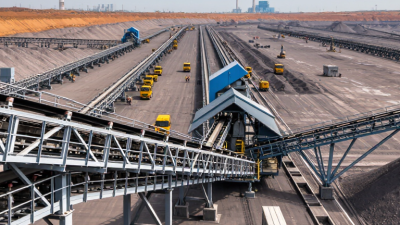
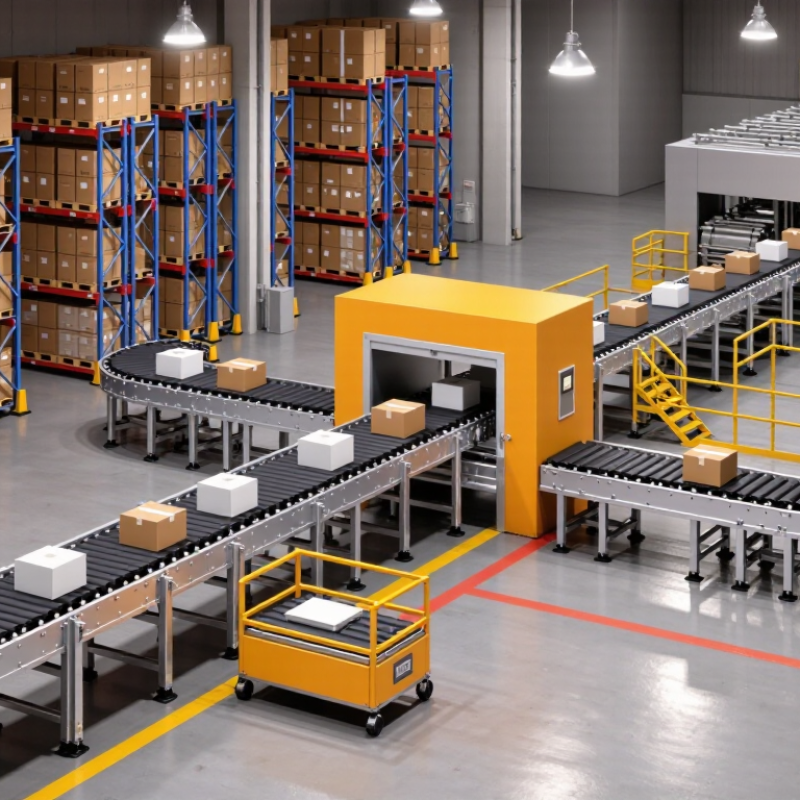
A belt conveyor moves material on an endless belt that travels around pulleys. The upper run carries the load, while the lower run returns the belt to the loading point. This loop supports a steady flow between operations, rather than requiring each load to be moved separately. It keeps moving. On a warehouse line, for example, cartons can pass from a packing station toward a dispatch area with fewer manual transfers.

A consistent feed helps the belt run smoothly. Uneven loading can pull material toward one edge, causing spillage or belt-tracking problems. Operators should check belt alignment, tension, and loading points during routine inspections. Dust, moisture, and sharp material can also affect belt life, so belt selection must match the actual load and conditions. A continuous system is not automatically the best choice; long routes, frequent stops, or changing product types may require careful planning.

Tips: Keep the loading stream centered, and clear buildup near pulleys. Watch for unusual belt drift or noise; small changes can be easy to miss. A simple inspection log can help reveal patterns, though it will not replace hands-on checks.

Core Design Data: ISO 5048 Calculates Power and Belt Tension

A belt conveyor suits steady, high-volume material handling, but its drive must match the route and load. ISO 5048 provides a calculation method for operating power and belt tensile forces in conveyors with carrying idlers. It turns design details into estimates engineers can check, rather than relying on motor size alone.

The calculation needs practical inputs: conveyor length, belt speed, material flow rate, belt and material mass, and vertical lift. It accounts for running resistance and elevation changes to estimate required power. The resulting tension values help assess drive placement and belt loading. Small details matter. A damp, heavy load or a misaligned idler can raise resistance beyond the tidy figures on a drawing. ISO 5048 is a useful baseline, not a substitute for checking startup, braking, take-up, and the actual operating conditions. Those checks can expose assumptions that looked reasonable at first. And sometimes, the input data is imperfect. Engineers should record uncertainty and review the calculation when site measurements become available.

Capacity in Numbers: Q = 3,600ρAv (t/h; ρ in t/m³)

A belt conveyor’s capacity can be estimated with Q = 3,600ρAv, where Q is tonnes per hour, ρ is bulk density in tonnes per cubic metre, A is the material’s loaded cross-sectional area in square metres, and v is belt speed in metres per second. The factor 3,600 converts seconds into an hour. For example, material with a density of 0.8 t/m³, an area of 0.12 m², and a belt speed of 2 m/s gives a theoretical capacity of about 691 t/h. Useful, but not a promise.

The neat part is also the trap. The equation assumes a steady, evenly loaded belt, while real material may arrive in surges or form an uneven profile. Moisture can change bulk density; a coarse, lumpy load may occupy the belt differently from fine, free-flowing material. Measure the loaded cross-section during representative operation, rather than relying only on a drawing. Inclines and loading conditions can reduce the practical capacity, too. A small mismatch in the assumed area makes a large difference to the result. Check the estimate against actual feed rates and spillage observations. Those details are easy to overlook.

Why Choose a Belt Conveyor for Material Handling?

Capacity in Numbers: Q = 3,600ρAv

Theoretical capacity increases linearly with belt speed when bulk density and loaded cross-sectional area stay constant. This chart assumes a bulk density (ρ) of 1.6 t/m³ and a material cross-sectional area (A) of 0.08 m². Actual capacity can vary with material properties, loading, and conveyor design.

Long-Distance Conveying: DIN 22101 Accounts for Resistance and Drive Power

A belt conveyor can move bulk material steadily over long distances, but distance alone does not determine the drive size. A loaded belt climbing a gentle slope may need more power than an empty belt on level ground. The difference comes from resistance along the route.

DIN 22101 provides a structured method for estimating conveyor resistance and the required drive power. The calculation considers factors such as idler rotation, belt and material movement, slope, and operating conditions. Engineers use these values to estimate belt tensions and check whether the drive can maintain the required speed. Small details matter. A few extra metres of lift or a heavier material load can change the result.

Reliable estimates depend on realistic inputs. Idler spacing, belt mass, material density, route length, and loading rate all deserve careful measurement. It is easy to trust a tidy spreadsheet too much. Field conditions can vary, and dirty or misaligned components may add resistance beyond the initial estimate. Reviewing assumptions against site observations helps keep the design grounded, especially when conveyor length makes later power adjustments difficult.

Why Choose a Belt Conveyor for Material Handling? - Long-Distance Conveying: DIN 22101 Accounts for Resistance and Drive Power

Illustrative conveyor scenario Conveying length Capacity Belt speed Vertical lift Effective belt pull Belt drive power Estimated drive input
Short long-distance route 500 m 1,000 t/h 2.5 m/s 15 m 90 kN 225 kW 239 kW
Medium-distance route 1,500 m 2,000 t/h 3.5 m/s 30 m 260 kN 910 kW 968 kW
Long-distance, high-capacity route 3,000 m 3,000 t/h 4.0 m/s 60 m 520 kN 2,080 kW 2,213 kW

These are illustrative engineering scenarios, not measured site data or a completed DIN 22101 design. Belt drive power is calculated as effective belt pull × belt speed; estimated drive input assumes 94% overall drive efficiency. A project-specific DIN 22101 assessment accounts for relevant motion resistances and operating conditions, and requires detailed conveyor, belt, idler, material, route, and start-up data.

Selection Checks: Compare CEMA Capacity, Belt Width, Speed, and Material

Why Choose a Belt Conveyor for Material Handling?

CEMA’s Belt Conveyors for Bulk Materials, 7th edition, treats capacity as a match between belt width, speed, loaded cross-section, and material characteristics. In practical terms, capacity rises with speed and the amount of material carried, but neither can be selected alone.

For example, a 0.08-square-metre load cross-section moving at 2 metres per second equals about 576 cubic metres per hour before adjustments for loading and spillage. That is only a screening estimate.

CEMA’s capacity tables account for trough angle and surcharge angle, while the actual material’s bulk density converts volume into tonnes per hour. Check the material before settling on belt width. A dry, free-flowing granule behaves differently from wet, lumpy ore; both can occupy the same volume but produce different mass rates.

CEMA guidance also makes belt speed a design variable, not a shortcut for solving undersized capacity. Higher speed can increase dust, wear, and impact at transfer points. Small changes matter. A first-pass estimate can still be wrong if moisture or lump size varies by season. Note those ranges, then compare the required tonnage with CEMA capacity data and the chosen belt’s loaded cross-section.

Dust tells a story. Look at transfer points during operation, not only at the drawing.